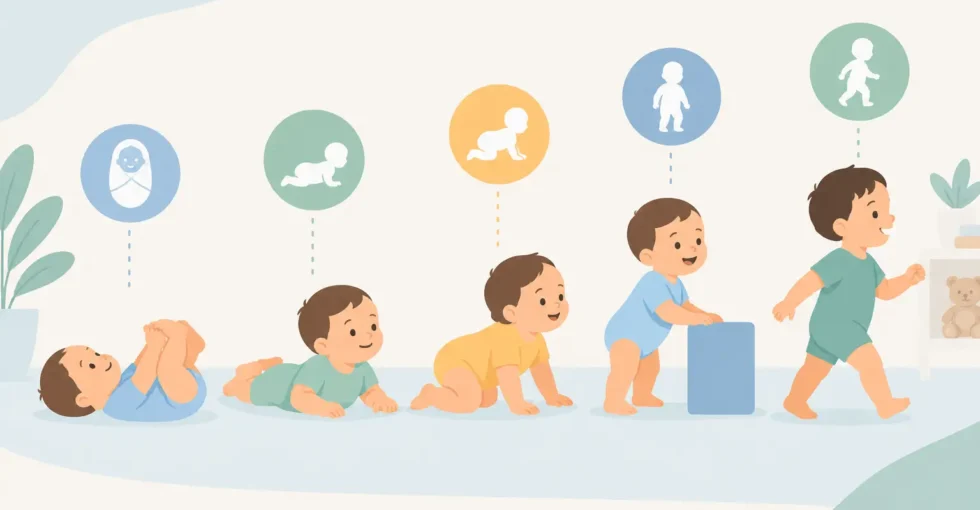

That first smile, an unexpected babble, the moment your baby reaches for your face – infant development is full of changes that can feel both magical and slightly bewildering. This guide to infant development milestones offers a reassuring way to notice your child’s growing skills without turning everyday family life into a checklist.
Every baby develops at their own pace. Some are eager to move but quieter with sounds; others chatter away before they show much interest in rolling or crawling. Milestones are useful reference points, not deadlines. What matters most is seeing gradual progress, responding to your baby’s individual needs, and knowing when a little extra advice could help.
What infant milestones can tell you
During their first year, babies are building foundations for communication, movement, confidence and relationships. These areas are closely connected. A baby who feels secure with familiar adults is more likely to explore; a baby who explores learns through touch, sound, movement and repetition.
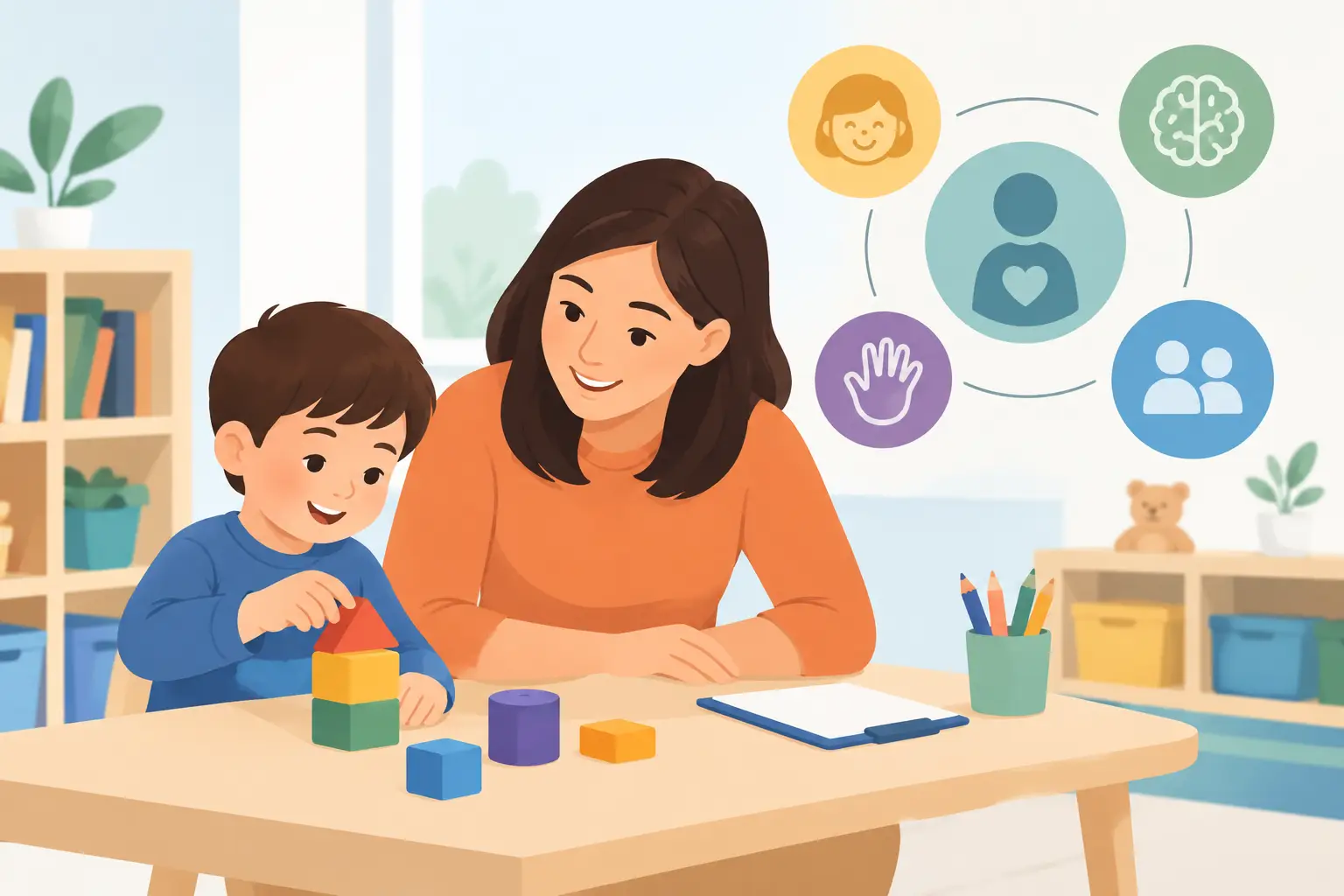
In the early years, practitioners often look at three prime areas of learning and development: communication and language, physical development, and personal, social and emotional development. At home, you do not need to create formal lessons for these to flourish. Loving interactions, predictable routines, floor play, songs, conversation and rest all make a real difference.
It also helps to remember that premature babies may follow a different timetable. For babies born early, health professionals may use their corrected age when discussing development. Your health visitor can explain what this means for your child.
A guide to infant development milestones by age
Birth to 3 months: settling into the world
In the first weeks, your baby is learning that their needs will be met. They may recognise your voice, turn towards familiar sounds and briefly focus on faces held close to them. By around 2 to 3 months, many babies begin to smile in response to people, make cooing noises and show more interest in what is happening around them.
Physical development at this stage can be subtle. Your baby may move their arms and legs with more purpose and start to lift their head briefly during supervised tummy time. Their head control is still developing, so always support their head and neck when holding or carrying them.
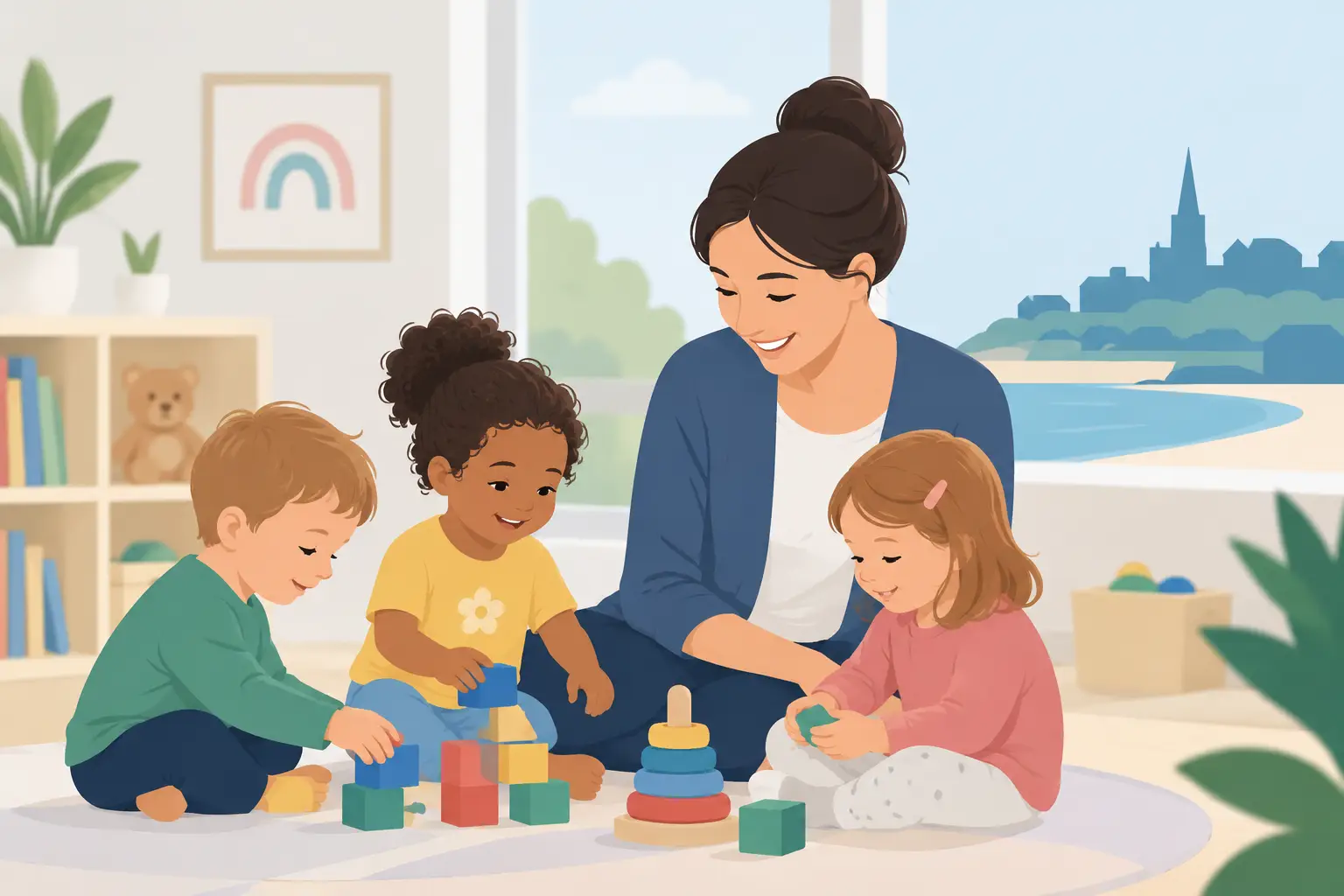
Tummy time is valuable because it strengthens the muscles needed for rolling, sitting and crawling later on. It does not need to be long or perfect. A few calm moments on a firm, safe surface while you sit nearby can be enough to begin with. If your baby dislikes it, try placing them on your chest or offering it in shorter bursts when they are alert and content.
Around 3 to 6 months: connection, curiosity and control
This is often a wonderfully interactive stage. Your baby may laugh, squeal, respond to their name, watch people closely and begin taking turns with sounds. They may copy facial expressions or make noises as if they are joining a conversation. Responding warmly to these attempts teaches them that communication is enjoyable and worthwhile.
Many babies start reaching for toys, bringing objects to their mouths and grasping with greater control. They may roll from tummy to back or back to tummy, although the timing varies widely. Some babies sit with support by the end of this period, while others prefer to practise rolling and wriggling for longer.
Offer a small choice of safe, simple objects with different textures, such as a soft cloth book, a rattle or a sensory toy. You do not need lots of equipment. A familiar adult describing what baby can see and do is often more engaging than a room full of toys. Try phrases such as, “You found the crinkly paper,” or, “The ball has rolled away.”
Around 6 to 9 months: exploring with purpose
Your baby may now be sitting independently or with very little support, transferring toys from one hand to the other and showing clear interest in cause and effect. Dropping a spoon repeatedly is not simply mischief – it is an experiment. Your child is discovering what happens when they act on the world around them.
Babbling often becomes more varied at this age. You may hear repeated sounds such as “ba-ba” or “da-da”. Although these sounds may not yet carry a specific meaning, they are important practice for speech. Pause after talking or singing to allow your baby time to respond in their own way.
Socially, your baby may become more selective about who holds them. They might protest when you leave the room or become wary of unfamiliar adults. This can be tiring for parents, especially when managing work and family routines, but it is a common sign that your baby has formed strong attachments. Gentle goodbyes, familiar routines and calm reassurance can help.
As mobility increases, safety needs to move up the family priority list. Some babies crawl, shuffle, bottom-scoot or pull themselves along; others do not crawl at all and move towards standing in a different way. Make space for safe floor play and check that low furniture, cords, stairs and small objects are appropriately managed.
Around 9 to 12 months: independence begins to show
Towards their first birthday, many babies pull themselves up, cruise along furniture or take a few supported steps. Others may be more focused on fine motor skills, such as picking up small pieces of food with finger and thumb. Sitting, crawling and walking are not a race. The pattern of development matters more than comparing your child with another baby of the same age.
You may notice more intentional communication too. Your baby could point, wave, clap, shake their head or use a sound consistently for a familiar person or object. They may understand simple everyday words, particularly when paired with gestures, such as “bye-bye”, “where’s Daddy?” or “give it to me”.
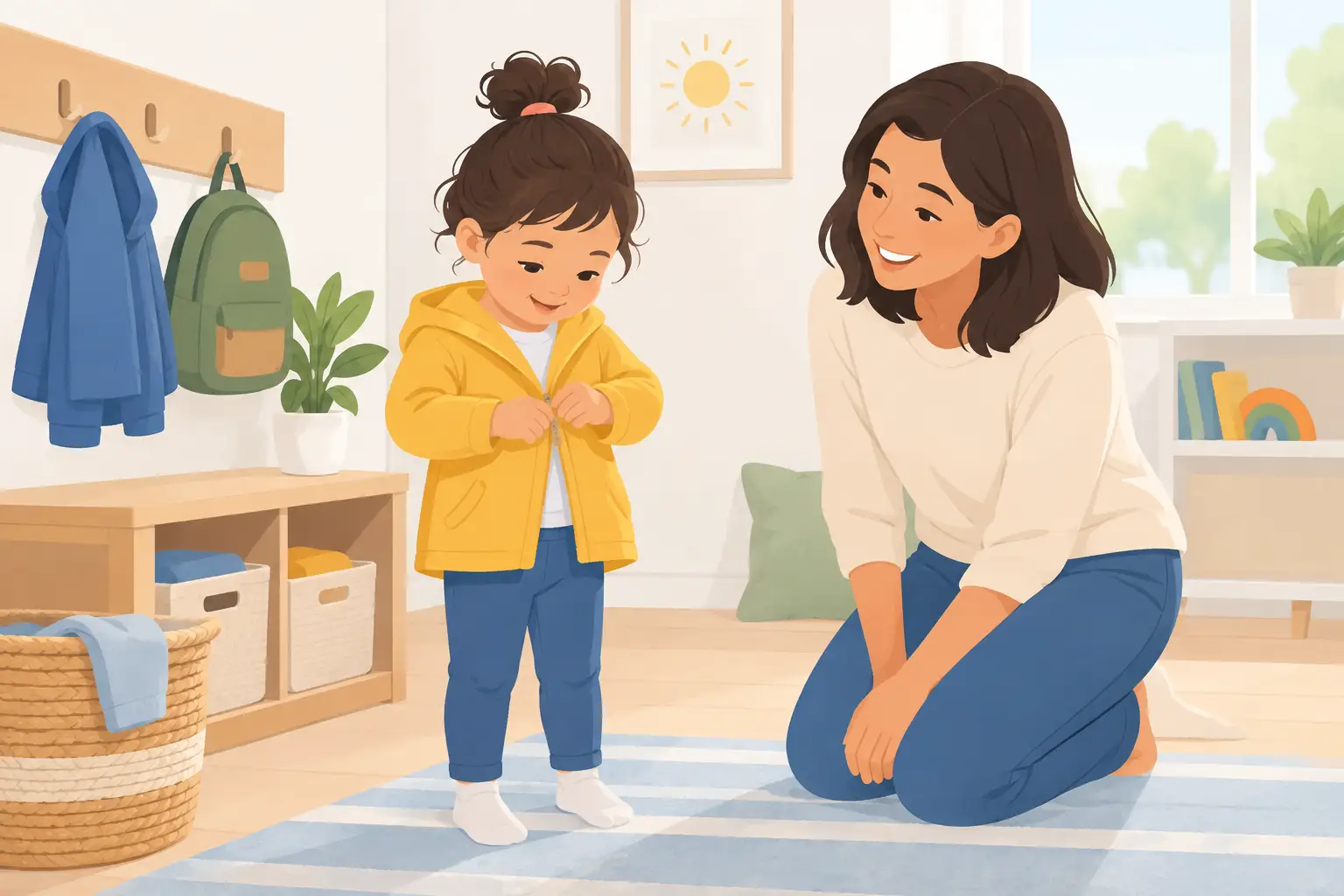
This is a good time to involve your child in simple routines. Let them hold a spoon while eating, choose between two safe toys, help turn the pages of a book or place a sock in the washing basket. These small opportunities support independence while keeping your baby connected to family life.
Supporting development without putting pressure on yourself
The most valuable activity is responsive time together. Talk about ordinary moments: nappy changes, meals, getting dressed, bath time and walks in the pram. Your baby learns language by hearing it used with warmth and purpose.
Reading together supports attention, vocabulary and closeness, even if your baby tries to chew the book or turns several pages at once. Singing nursery rhymes helps babies hear patterns in language, while action songs encourage movement and anticipation. Repeating favourites is helpful, not boring. Babies learn through familiar experiences repeated many times.
A steady routine can also give babies an oasis of calm. Regular sleep, meals and play do not have to happen at exactly the same minute every day, but predictable patterns help children feel safe enough to explore. If your family uses nursery care, sharing key details about sleep, feeding, new interests and comforting routines creates consistency between home and setting.
At Dinotots, dedicated key carers build this kind of partnership with families, observing each child’s interests and sharing the small moments of progress that parents understandably do not want to miss.
When to ask for advice
It is natural to have questions, particularly when you see other children developing differently. Trust your instincts, but try not to rely on social media comparisons. Videos rarely show the full picture of a child’s health, temperament or developmental journey.
Speak to your health visitor, GP or an appropriate healthcare professional if your baby seems to lose skills they previously had, does not respond to sounds or visual stimuli, has persistent difficulty feeding, or you are worried about their movement, communication or interaction. You can also ask for advice if something simply does not feel right. Early support is not about labels or blame. It is about understanding your child and putting the right help in place when it is needed.
Celebrate the child in front of you
Milestones can help you notice progress, but they cannot capture your baby’s whole personality: the way they relax at a familiar song, concentrate on a spoon, light up when you return to the room, or find joy in the same game for the tenth time. Keep offering love, language, safe opportunities to explore and plenty of time to be together. Your attentive presence is one of the strongest foundations your child can have.