
A safeguarding concern can begin with something small: a child becoming unusually withdrawn, a worrying comment at bedtime, an unexplained injury, or a feeling that something is not right. Knowing how to report safeguarding concerns can feel daunting, especially when you do not yet have all the answers. Your role is not to investigate or prove what has happened. It is to share what you have seen, heard or been told so the right people can help keep a child safe.
When should you report a safeguarding concern?
Safeguarding is about protecting children from harm and promoting their welfare. Concerns may relate to possible physical, emotional or sexual abuse, neglect, domestic abuse, online harm, exploitation, bullying, or a child’s care and wellbeing more broadly.
A single sign does not always mean a child is being harmed. Children can have changes in behaviour for many reasons, including illness, bereavement, family changes or difficulties at school. However, you should report a concern when something feels unusual, persistent or worrying, particularly if a child’s words, behaviour or appearance suggest they may be unsafe.
Trust your instincts, but describe facts rather than making assumptions. For example, it is more helpful to say that a child arrived without lunch on three occasions and said there was no food at home than to label a parent as neglectful. Clear, factual information gives safeguarding professionals the best starting point.
If a child is in immediate danger
If you believe a child is at immediate risk of harm, call 999 and ask for the police. This includes situations where a child may be injured, missing, left alone in unsafe circumstances, or at risk of serious violence or abuse.
If the danger is not immediate but you believe urgent action is needed, contact your local council’s children’s social care team or its out-of-hours emergency duty team. You can also contact the police on 101 if you need to report a non-emergency crime or concern.
Do not delay a report while trying to gather more evidence. Safeguarding teams are trained to assess information, consider the wider picture and decide what support or protective action may be needed.
If a child tells you something worrying
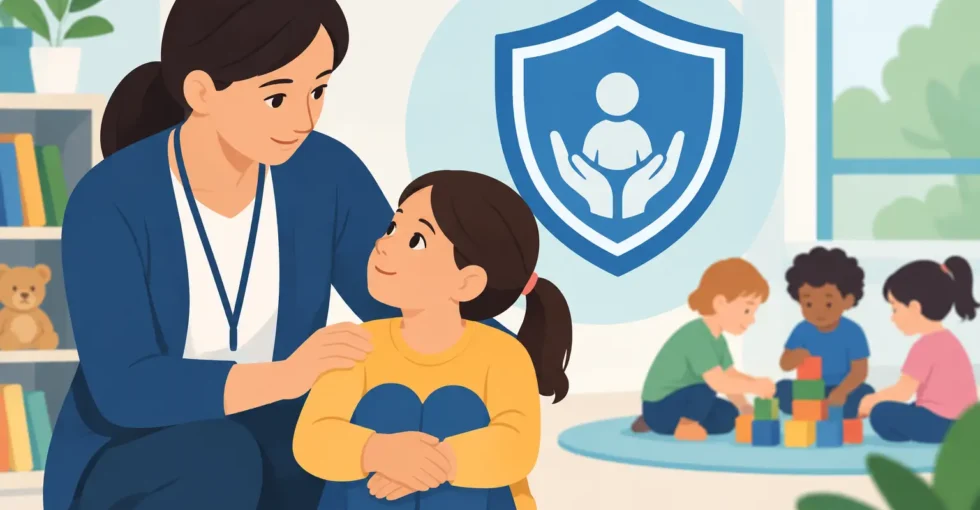
A child may disclose a concern directly, or they may say something that leaves you feeling unsettled. Your calm response can make a real difference. Find a quiet, safe space if possible and give the child your full attention.
Listen carefully and let them speak in their own way. You can use gentle prompts such as, “Tell me what happened,” or, “Can you explain that a little more?” Avoid asking lots of questions, suggesting answers or asking a child to repeat their story. Questions such as, “Did your dad do that?” can unintentionally influence what a child says.
Reassure them that they did the right thing by speaking to you. Be honest that you may need to tell someone who can help keep them safe. Never promise to keep a disclosure secret, even when a child asks you to. They deserve honesty as well as reassurance.
Write down what was said as soon as you can. Use the child’s exact words where possible, along with the date, time, place and names of anyone present. Keep your notes secure and share them only with the appropriate safeguarding professional. Do not discuss the concern in a parent group, on social media or with people who do not need to know.
Who should you report safeguarding concerns to?
The right person depends on the setting and the nature of the concern. If a child attends a nursery, school, holiday club or after-school provision, the first point of contact is usually the Designated Safeguarding Lead, often called the DSL. This is the trained person responsible for receiving concerns and taking the appropriate next steps.
Where there is concern about a child outside a setting, or you do not feel able to speak to the setting, you can contact your local authority children’s social care team directly. Many councils have a Multi-Agency Safeguarding Hub, sometimes called MASH, which brings together professionals who assess safeguarding referrals.
You may need to contact one of the following:
- the setting’s Designated Safeguarding Lead or manager
- your local council’s children’s social care or MASH team
- the police, if there is immediate danger or a crime may have been committed
- the Local Authority Designated Officer, often called the LADO, if the concern is about an adult who works or volunteers with children
If your concern relates to a member of staff at a childcare setting, do not raise it directly with the person involved. Speak to the manager or safeguarding lead. If the concern is about the manager or safeguarding lead, contact the provider’s senior leadership team, the local authority, or the police. You can report externally if you feel your concern has not been taken seriously.
What to include in your report
You do not need a perfectly written account. It is far better to report a concern promptly than to wait for every detail. Still, a few practical notes can help professionals understand what has happened and decide what to do next.
Include the child’s name, age, address or setting where known, along with the parent or carer’s details if you have them. Explain what you saw, heard or noticed, when it happened, and whether it has happened before. Record the child’s words accurately if they disclosed something. Also share any immediate safety worries, such as whether they are due to go home with a particular adult or whether an injury needs medical attention.
Keep facts and opinions separate. You can say, “I am worried because…” but be clear about what led you to feel that way. If you have photographs, messages or other evidence, do not alter or share them widely. Tell the safeguarding professional what you have, and follow their advice on providing it safely.
What happens after you make a report?
The person receiving the report should listen, make a record and assess the level of concern. In a childcare or school setting, the DSL may speak to relevant professionals, make a referral to children’s social care, or put additional support in place. They may not be able to tell you every outcome, because families and children have a right to privacy.
This can feel frustrating, especially when you care deeply about a child. A lack of detailed feedback does not mean nothing has happened. Safeguarding work often involves careful information-sharing, conversations with families and assessments that cannot be discussed openly.
Professionals will usually consider whether parents should be told about a referral. In many situations, working openly with families is helpful and appropriate. However, if informing a parent could increase the risk to a child, compromise an investigation or place someone else at risk, action may be taken without first seeking consent.
If you continue to be worried after reporting, report again. New information, a repeated pattern or a child’s changing circumstances can alter the assessment. It is appropriate to ask whether your concern has been recorded and whether there is anything further you should do.
Reporting concerns about a childcare setting
Parents should expect childcare providers to have clear safeguarding procedures, trained staff and a culture where concerns are listened to respectfully. If you are worried about how a child has been treated, how an injury was managed, or whether a setting has responded properly to a disclosure, raise it with the manager or safeguarding lead as soon as possible.
Ask for your concern to be recorded and request confirmation that it has been received. If the response does not reassure you, or you believe a child remains at risk, contact children’s social care or the police directly. Concerns about a registered early years provider can also be raised with Ofsted, but Ofsted is not a substitute for an urgent referral to children’s social care or the police where a child may be unsafe.
At Dinotots, safeguarding is built into everyday care: attentive relationships, clear reporting routes and the confidence for staff to act when something does not feel right. Children are safest when the adults around them communicate early, calmly and with care.
You do not need proof to speak up
Many people worry about getting it wrong, damaging a relationship or causing unnecessary upset. Those feelings are understandable. Yet safeguarding reports are not accusations or verdicts. They are a way of passing a worry to people with the responsibility and training to assess it properly.
A child may never know that you made a call, wrote down their words or asked for advice. But they may benefit from the support that follows. When a concern stays with you, sharing it could be the caring step that helps a child feel safer, heard and protected.