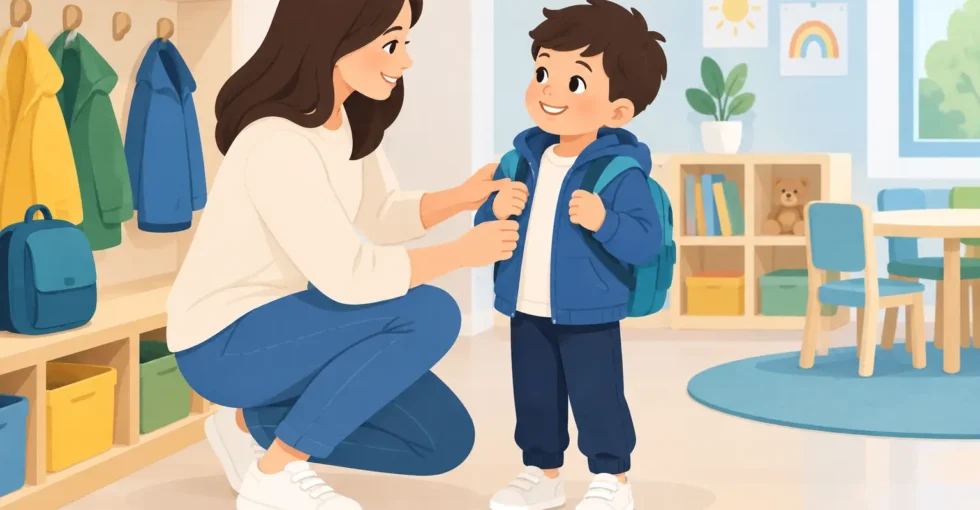

A favourite jumper covered in paint, damp trouser knees after outdoor play and a proud child showing you a mud pie are all signs of a busy nursery day. When parents ask what children should wear to nursery, the simplest answer is: clothes that let them move, explore and feel comfortable – and that you do not mind getting messy.
Nursery is a place for energetic, hands-on learning. Children may be building dens, pouring water, climbing, dancing, planting seeds or settling down with a story, often within the same morning. The right outfit supports their independence and confidence while making the day easier for them, their friends and their key carers.
What should children wear to nursery each day?
Choose practical, comfortable clothes that your child can manage as independently as possible. Soft leggings, joggers, T-shirts, long-sleeved tops, loose dresses worn with leggings, and sweatshirts are usually excellent everyday choices. They allow children to crouch, stretch and climb without being restricted.
Avoid saving nursery for precious outfits or anything that needs constant adjusting. Clothes can be stained despite aprons and careful supervision, especially during creative activities and outdoor play. Mess is not a sign of poor care – it is often evidence of learning through play.
For toilet-training children, simple waistbands are particularly helpful. Trousers, leggings and skirts that pull up and down easily can make a real difference when a child needs the toilet quickly. Complicated buttons, tight belts, dungaree fastenings and fiddly layers can be frustrating for little hands and may dent a child’s growing sense of independence.
Comfort also matters emotionally. If your child dislikes scratchy labels, stiff denim, socks that slip or particular fabrics, listen to them. A child who feels physically settled has more space to enjoy the people, routines and opportunities around them.
Dress for layers, not one perfect temperature
Nursery rooms are kept comfortable, but a day may include time in a warm activity area, a cool garden, a buggy walk or a change in weather at collection time. Layers give staff and children flexibility.
A vest or T-shirt with a jumper, cardigan or lightweight fleece works well for most of the year. In colder months, add a warm, waterproof coat, hat and gloves. In warmer weather, send a light layer for cooler mornings and make sure your child has a sun hat. A named waterproof all-in-one can be especially useful for younger children who love puddles, sand and outdoor discovery.
Try not to rely on a very bulky coat as the only warm layer. It can be awkward indoors and may leave a child too warm or too cold as activities change. Several easy layers are usually more practical.
Nursery shoes: safe, secure and ready for play
Children need shoes that stay firmly on their feet while they run, climb and play. Well-fitting trainers or sturdy shoes with non-slip soles are a sensible choice for most nursery days. Velcro fastenings are ideal for young children learning to put on and take off their own shoes.
Shoes should be comfortable from the start, with enough room for toes to move, but not so loose that they slip at the heel. Check fit regularly, as young feet grow quickly. If your child wears wellies for wet weather, send their usual shoes too where possible. Wellies are brilliant for puddles but can be less comfortable for a whole day indoors.
Open-toed sandals, loose slip-ons, fashion boots with heels and shoes with long laces can make active play more difficult. The priority is always safe movement, not a picture-perfect outfit.
Socks, slippers and indoor routines
Every nursery manages footwear slightly differently. Some may ask children to wear outdoor shoes throughout the day, while others use indoor shoes or slippers in certain rooms. Check your setting’s routine before buying anything special.
If slippers are used, choose a pair with a secure fastening and grip on the sole rather than loose, fluffy styles. Name them clearly, along with socks and shoes. Small items are easy to mix up in a busy cloakroom.
Pack spare clothes for the unexpected – and the ordinary
Even the best-prepared child may need a change of clothes. Water play, paint, food spills, a toilet-training accident or an enthusiastic puddle jump can all happen before lunch. Having familiar spares in their bag means your child can get comfortable again quickly.
For babies and younger toddlers, more changes are often useful, particularly if they are still in nappies or prone to dribbles. Older preschoolers may need fewer, but a full spare outfit remains reassuring. Include underwear and socks, not only tops and trousers.
A practical nursery bag might contain:
- two complete changes of clothes, including socks and underwear
- nappies, wipes and nappy cream if your nursery asks families to provide them
- weather-appropriate outerwear, such as a waterproof suit or sun hat
- any comfort item agreed with your child’s nursery, such as a small comforter for settling times
Review the bag each week. Replace clothes that have been used, check that the size is still right and swap seasonal items when the weather changes. It is a small routine that can prevent a stressful morning.
What not to send to nursery
Nursery clothing needs to be safe as well as comfortable. Avoid items with long cords, loose decorative pieces, easily detached beads or sequins, and jewellery that could catch during play. Necklaces, bracelets and hoop earrings are best left at home unless there is a specific medical or cultural reason to wear them and this has been discussed with the nursery.
It is also wise to keep special toys and treasured accessories at home. Children can become upset if a beloved item is lost, broken or borrowed by another child. If a comforter is helpful during settling-in, speak with staff so it can be used in a way that supports your child’s routine.
Fancy dress deserves a little thought too. It can be wonderful for a themed day or celebration, but everyday nursery life is usually easier in clothes that children can toilet in, move in and get muddy in. A superhero cape may feel exciting at drop-off, yet it can become a snagging hazard on a climbing frame.
Label everything, even the small things
In a room full of similar blue coats and tiny trainers, labels save time and tears. Name coats, jumpers, hats, gloves, shoes, bags, water bottles and spare clothes. First name and surname are often most useful, especially where more than one child shares a first name.
Iron-on, stick-on or sew-in labels can all work well. A permanent marker is a quick option for care labels or the inside of shoes, although it may fade with washing. Whichever method you choose, check labels from time to time. Clothing is often passed down, and an old name can lead to confusion.
Help your child take part in getting ready
Choosing clothes for nursery can become a calm part of the morning routine rather than a daily battle. Offer two suitable options: “Would you like the green top or the striped one?” This gives children a sense of choice while keeping the decision manageable.
As they grow, encourage them to practise simple skills such as putting arms through sleeves, pulling up leggings and fastening Velcro shoes. There is no need for perfection. Each small success builds the independence that helps children feel capable throughout their nursery day.
If your child is new to nursery, familiar clothing can be comforting. Their usual cosy jumper or favourite practical T-shirt can offer a little piece of home while they become confident in a new environment. At Dinotots, we know that the details around drop-off matter: when a child is warm, comfortable and ready to play, families can begin the day with greater peace of mind.
The best nursery outfit is not the smartest one. It is the one that gives your child freedom to paint boldly, climb safely, splash happily and come home with stories worth hearing.