
A place can look cheerful, caring and busy at drop-off, yet still not be the right fit for your family’s routine. Understanding nursery versus preschool differences helps you ask better questions about hours, learning, funding and the everyday care your child will receive. Most importantly, it helps you choose a setting where they can feel safe, known and happy while you manage work and family life.
Nursery versus preschool differences in the UK
In everyday conversation, the words “nursery” and “preschool” are often used interchangeably. Both can offer early years education, opportunities to make friends and nurturing support before school. The difference is usually less about the quality of care and more about the child’s age, the length of the session and the practical purpose of the setting.
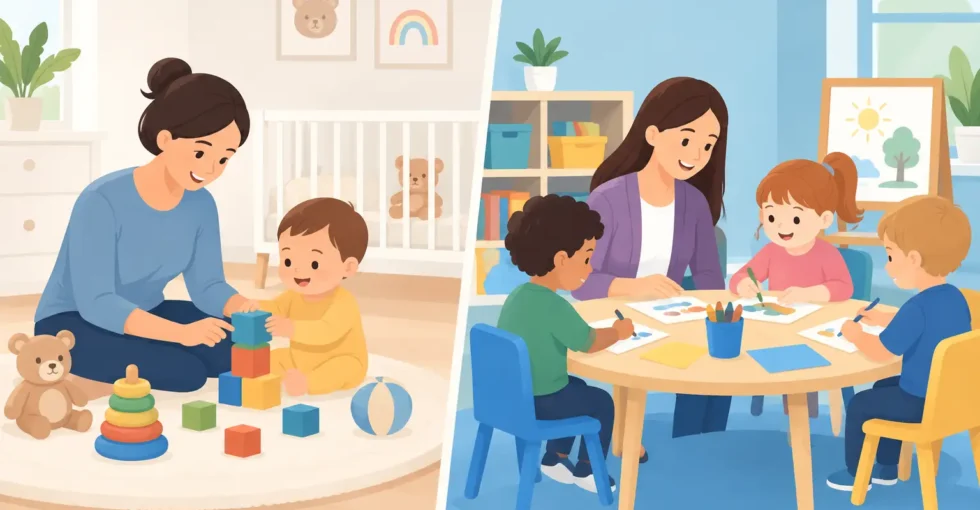
A nursery commonly provides childcare from infancy or toddlerhood until a child starts school. It is often open for longer days across much of the year, making it a practical choice for working parents. Children may move through age-specific rooms, with routines and activities adapted as they grow.
A preschool often focuses on children in the years immediately before Reception, usually from around age two or three to four. It may operate during school hours, for shorter sessions or term time only. This can suit families who need a few structured sessions each week rather than full-day childcare.
That said, there is no single rule. Some nurseries offer term-time places or shorter sessions, while some preschools provide extended hours. Always look beyond the name and ask what is actually included.
Age range and daily routine
One of the clearest differences is the age range a setting is designed for. A day nursery may welcome babies, toddlers and preschool-aged children under one roof. For a young child, this can create continuity: familiar faces, a consistent approach and a gentle progression from early care towards school readiness.
For babies and younger toddlers, nursery care is typically built around individual needs. That may mean sleep routines, bottle or mealtime arrangements, nappy changes, cuddles, sensory play and plenty of close interaction with a key carer. The aim is not to hurry development, but to build security and curiosity at the child’s pace.
As children become more independent, the routine naturally becomes more social and structured. They might enjoy small-group activities, outdoor play, stories, creative experiences and early number or language games, alongside meals, rest and free choice. In a full-day nursery, these learning moments are woven through ordinary parts of the day.
Preschool sessions may feel more focused on the rhythm of a school day. Children often arrive, settle into activities, join group time, have a snack, play outdoors and take part in planned learning before being collected. This can be a lovely stepping stone for children who are ready for more independence and whose families do not need longer childcare hours.
Neither routine is automatically better. A child who thrives on familiar, longer days may be very happy in nursery, while another family may find a shorter preschool session fits beautifully around home life, work patterns or caring commitments.
Learning is not only for preschool children
A common misunderstanding is that nursery is mainly childcare, while preschool is where “real” learning begins. In a high-quality early years setting, this distinction does not hold up.
In England, registered early years providers work within the Early Years Foundation Stage, often called the EYFS. This framework covers learning and development from birth to age five. It recognises that babies learn through responsive relationships, movement, play, language and exploration – not through formal lessons.
At nursery, a practitioner may support communication by narrating a toddler’s play, build physical confidence through climbing and dancing, or encourage early maths while children share fruit at snack time. These ordinary interactions matter. They help children develop the confidence to try, talk, cooperate and solve small problems for themselves.
Preschool-aged children may have more planned opportunities to practise listening, following instructions, recognising their name, using mark-making tools and joining in with group activities. But school readiness is much broader than knowing letters or numbers. It includes managing feelings, taking turns, using the toilet independently where developmentally appropriate, speaking up when help is needed and feeling comfortable away from home.
The strongest settings make learning feel purposeful and joyful rather than pressured. Children should have time to play deeply, move their bodies, explore their interests and build warm relationships with adults who understand them.
Care arrangements and family logistics
For many parents, the decision comes down to the practical shape of the week. Nursery is often designed to support full-time or part-time working patterns, with early drop-offs, later collections and meals included during the day. This can reduce the number of handovers and arrangements a family needs to manage.
Preschool can be an excellent option where a parent is at home, works flexible hours or only needs care for selected sessions. However, it is worth checking the detail before assuming the fees or hours will suit. A lower session cost may still leave gaps around school-hour timings, lunch, holidays or wraparound care.
When visiting a setting, ask how it handles the moments that can make family life feel either calm or rushed: settling in, drop-off, meals, naps, collection, holiday cover and communication when your child has had a difficult morning. Reliable routines and clear updates give parents confidence, especially in the early weeks.
Funding: what to check before choosing
Government-funded early education and childcare entitlements can be available for eligible children, but the offer and eligibility can depend on a child’s age, your circumstances and the type of provision. Both nurseries and preschools may offer funded places, but their approach to sessions, additional hours and charges can differ.
Ask each provider how funded hours are offered across the week and year. Find out whether you can stretch funded hours over more weeks, whether meals and consumables are charged separately, and how additional sessions are priced. Clear information helps you compare like with like and plan confidently.
It is also sensible to ask about availability. A setting may offer funded places but have limited spaces on the particular days you need. The right place on paper is only helpful if it works consistently for your family.
What quality looks like in either setting
Whether you choose nursery or preschool, look for more than attractive resources or a busy activity board. Children flourish when they are emotionally secure, listened to and encouraged by adults who know their personalities well.
A visit should give you a sense of how staff speak with children. Are they down at their level? Do they respond patiently to worries and excitement? Is there a calm, organised routine without children being expected to sit still for too long? Notice how staff welcome families too. A good partnership means parents are treated as experts in their own child.
You may also want to ask about staff qualifications, key-carer arrangements, safeguarding procedures, outdoor play, food, sleep support and how the setting shares observations and progress. These details are not simply policies. They shape whether your child feels secure and whether you feel informed.
For families seeking longer-day care alongside meaningful early learning, a nursery such as Dinotots can offer the reassurance of dedicated care, EYFS-based experiences and practical support in one familiar setting. For others, a shorter preschool timetable may be exactly what their child needs at that stage.
Choosing the right fit for your child
Start with your child, then consider the timetable. Their age, temperament, experience of being apart from you and need for routine all matter. A confident three-year-old may love a lively preschool session, while a younger child may benefit from the continuity and individual care of a nursery day. Equally, a child who has attended nursery for years may be ready to move into a more session-based preschool group.
It can help to compare settings using four simple questions:
- Does the opening pattern work for our real week, including holidays and unexpected changes?
- Will my child have a consistent key person and enough time to settle at their own pace?
- How does the setting support learning through play, independence and emotional development?
- Are fees, funded hours, meals and any additional charges explained clearly?
Trust your observations as well as the answers. The right setting rarely feels perfect in every possible way, but it should feel safe, welcoming and well organised. Your child should be greeted as an individual, and you should leave knowing who is caring for them, what their day may hold and how you will be kept involved.
The best choice is the one that gives your child room to grow and gives your family a little more breathing space. A thoughtful visit, an honest conversation with staff and a clear view of your own routine can turn a difficult decision into a confident first step.