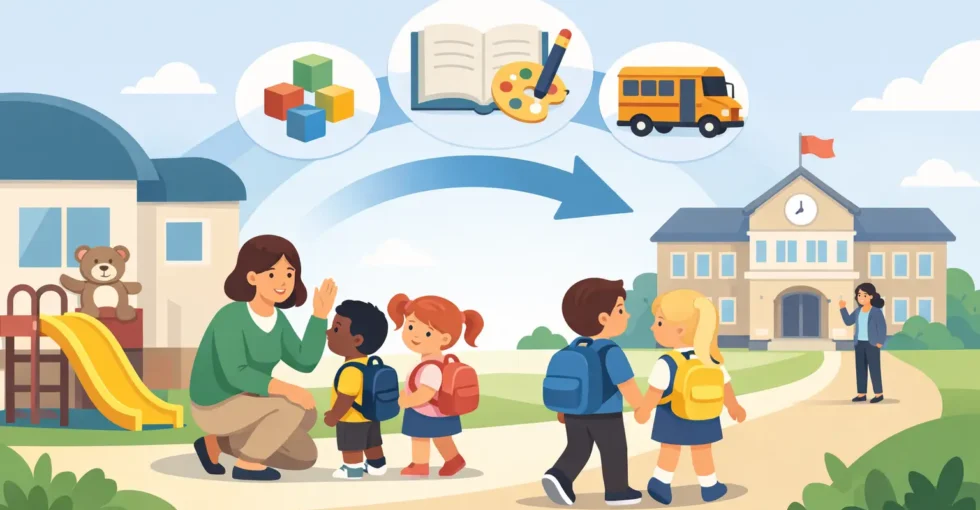

The first school uniform can feel wonderfully exciting – and surprisingly emotional. A child who has happily bounded into nursery for years may suddenly feel unsure about a new classroom, new adults and a much bigger playground. Understanding how nurseries support school transitions can help families see that school readiness is not about making children grow up too soon. It is about giving them the confidence, routines and reassurance to take their next step feeling safe.
A thoughtful transition begins well before the first morning at primary school. It brings together the child, their family, nursery practitioners and the receiving school, with each adult helping to make the unfamiliar feel manageable.
How nurseries support school transitions with confidence
Children do not all approach change in the same way. One child may be counting down the days to Reception, while another may worry about leaving favourite practitioners or being away from a younger sibling. Good nursery provision makes room for both reactions without labelling either as a problem.
The strongest support starts with secure relationships. When children have a trusted key person who knows what makes them laugh, what unsettles them and how they prefer to be comforted, they have a safe base from which to explore a new idea: school. Practitioners can talk positively about the move, answer questions in age-appropriate language and notice when a child needs extra reassurance.
This is particularly valuable because children often communicate uncertainty through behaviour rather than words. They may become clingy at drop-off, return to younger play patterns or talk repeatedly about practical details such as where they will eat lunch. Calm, consistent responses help children understand that these feelings are normal and temporary.
Building independence through everyday routines
School readiness is sometimes mistaken for academic achievement alone. Recognising letters, counting objects and holding a pencil can all be helpful, but they are only part of the picture. Children also need to manage small everyday tasks, cope with waiting, listen to instructions and ask for help when they need it.
Nursery routines offer natural opportunities to practise these skills without pressure. Children might put on their own coat, tidy resources away, choose an activity, wash their hands before meals or carry a plate to the table. At first, an adult may offer plenty of support. Over time, they step back at the right moment, allowing a child to experience the pride of saying, “I did it myself.”
The aim is not perfection. Some four-year-olds will still need help with buttons or remembering where they put their water bottle, and that is entirely expected. What matters most is that they are comfortable having a go and know that adults will support them kindly when things feel tricky.
Making learning feel familiar, not frightening
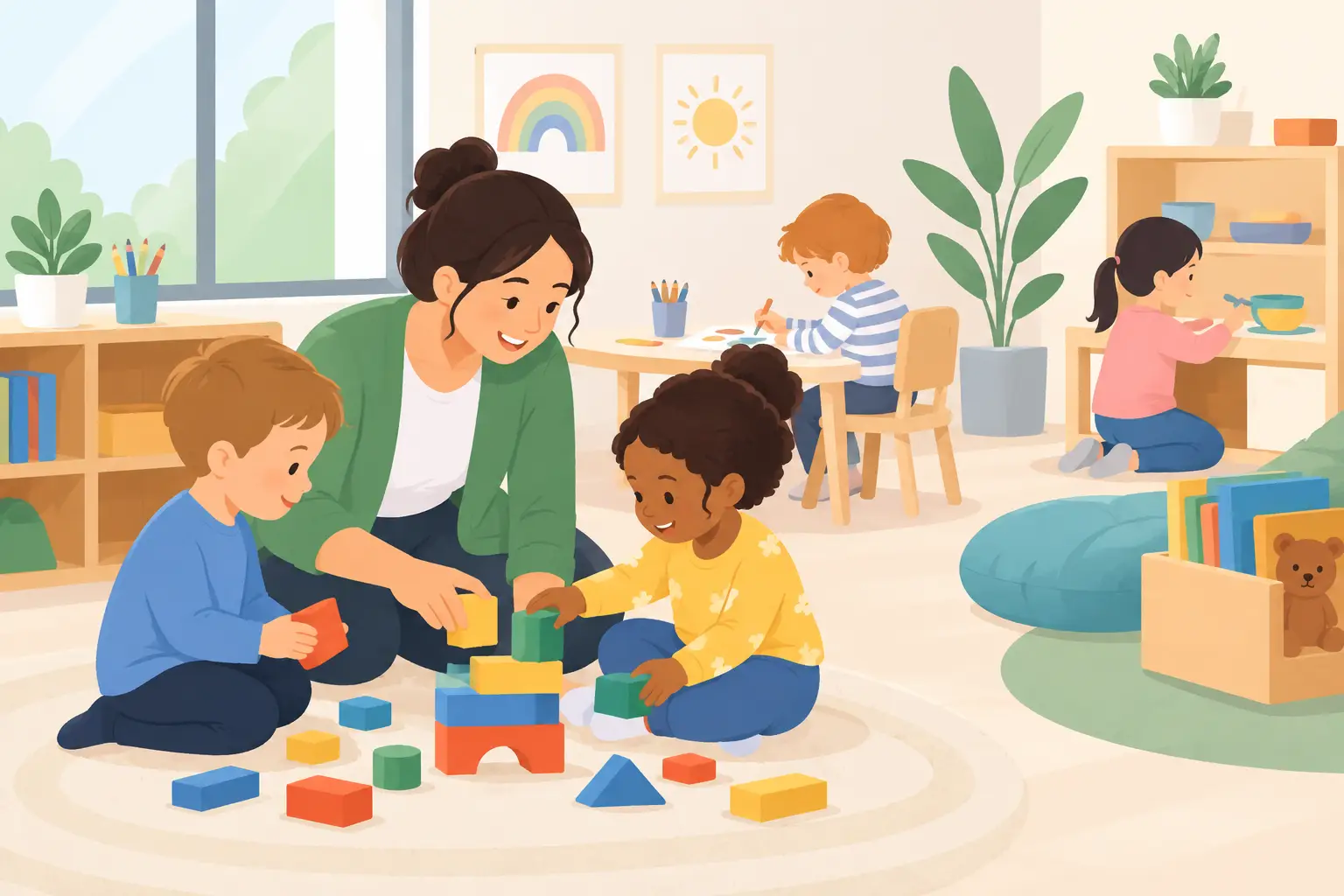
High-quality early years learning prepares children for school by nurturing curiosity. Through stories, songs, mark-making, construction, imaginative play and conversations, children develop language, concentration and problem-solving skills that will support them in Reception.
Practitioners can gently introduce school-related ideas through play. A role-play area may become a classroom, with children taking turns to be teacher, pupil or lunchtime helper. Reading books about starting school can open useful conversations, especially for children who find it easier to talk about a character’s worries than their own.
This should never become a rehearsal for sitting still all day. Reception classes continue to use play as an important way of learning, and children benefit from arriving with a love of exploring, creating and asking questions. The best preparation protects that enthusiasm.
Supporting friendships and emotional resilience
For many children, the social side of school is the biggest change. They may be joining a larger group, meeting children from other settings or finding that a close nursery friend is going to a different school. Nurseries help by giving children regular chances to practise being part of a group.
Sharing resources, taking turns, negotiating roles in play and resolving small disagreements are all valuable lessons. Practitioners do not simply step in to solve every problem. They help children find words for their feelings, listen to another point of view and try again after a setback.
Confidence also grows when children are trusted with manageable responsibility. Being the helper who hands out cups, chooses a song or checks that everyone is ready to go outside shows a child that they have something worthwhile to contribute. These small moments can make a real difference when they enter a busy new classroom.
For a child who is shy, sensitive or anxious about change, transition support may need to be more individual. A familiar visual timetable, a simple story about their new routine or extra time to talk with a key person can all help. If a child has additional needs, practitioners and parents should share strategies early, so that the receiving school understands what helps that child feel secure and included.
Creating a bridge between nursery, home and school
Parents know their children best, and open communication is at the heart of a positive transition. Nursery teams can share what they are seeing day to day: growing confidence at group time, a new friendship, a concern about changes in behaviour, or a skill the child is working hard to master. This gives families a fuller picture than a single school readiness checklist ever could.
At home, consistency can be reassuring. Parents do not need to turn the summer into school practice, but simple routines can help. Talking about the school day in positive, realistic terms, practising the morning routine and involving a child in choosing their uniform or bag can make the transition feel more predictable.
It is equally helpful to avoid promising that school will be perfect every day. Children need permission to feel excited and nervous at the same time. A parent might say, “There will be lots of new things to learn, and your teacher will help you,” rather than insisting there is nothing to worry about. This acknowledges their feelings while keeping the message hopeful.
Where possible, nursery practitioners share meaningful information with the receiving school. This may include a child’s interests, ways of communicating, friendships, learning progress and any support that helps them thrive. A transition is smoother when a Reception teacher can greet a child with genuine knowledge of who they are, rather than meeting them as a blank page on the first day.
Visits and familiar faces can make a difference
School visits are useful because they turn an imagined place into a real one. Seeing the classroom, playground and toilets can answer many of the practical questions children carry quietly. Meeting a teacher or teaching assistant gives them a face to connect with the stories they have heard at home.
However, not every child will have the same opportunity for visits, and some may still feel worried afterwards. Nursery can fill the gaps by using photographs supplied by schools, discussing the journey to school and encouraging children to share what they noticed. If several children are moving to the same school, they may also take comfort in knowing a familiar friend will be there.
At Dinotots, the focus is on helping each child move forward with happiness and confidence, while giving families clear, caring support throughout the process. That means recognising progress in all its forms – from confidently saying goodbye at the nursery door to speaking up in a small group or trying a new task independently.
What parents can look for in transition support
A nursery’s approach should feel organised as well as nurturing. Parents can ask how the setting develops independence, communicates with local schools and supports children who are worried about the move. It is also worth asking how practitioners identify children who may need additional support, rather than assuming every child will be ready in the same way at the same time.
Look for staff who speak about your child as an individual. A reassuring answer is not simply, “They will be fine.” It is, “We know they enjoy stories, can be quiet in a new group, and respond well when we give them time to watch first. We will build on that.” This combines warmth with a practical plan.
The weeks before school may bring tears, big questions, excitement and sudden bursts of independence. None of these mean a child is not ready. With familiar routines, trusted adults and patient encouragement, children can carry the security they have built at nursery into their new classroom – one brave, ordinary morning at a time.