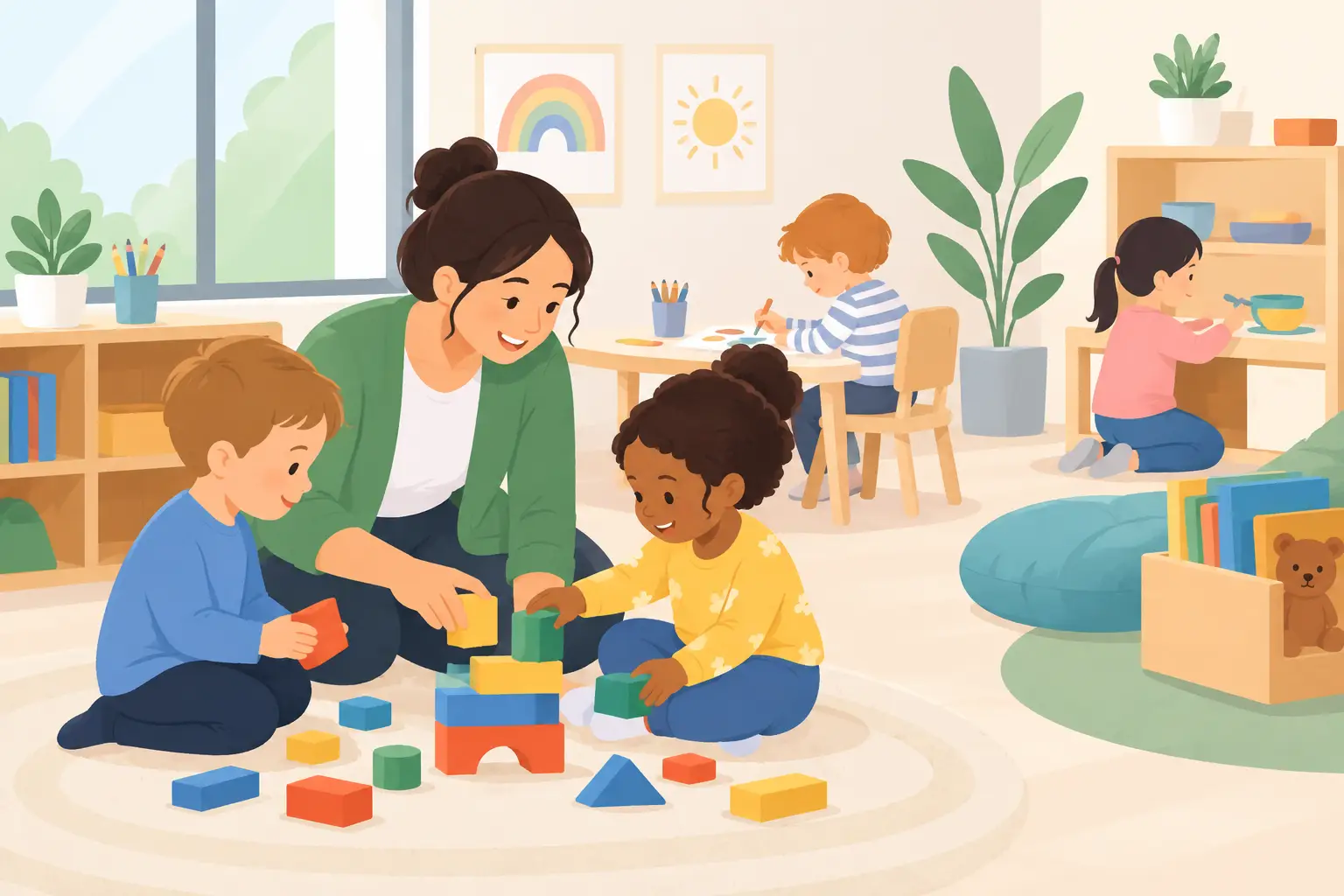

The moment you hand your child over at the nursery door can feel far longer than it really is. They may cling tightly, cry as you leave, or suddenly insist they do not want to go – even when they happily played there yesterday. Preschool separation anxiety is common, and it is not a sign that you have done anything wrong or that your child is not ready to learn and make friends.
For many children, starting preschool or returning after a break is a big emotional step. They are learning that a parent can leave and reliably come back, while also getting used to new people, routines, sounds and expectations. With time, warmth and a consistent approach between home and nursery, most children find their feet.
Why preschool separation anxiety happens
Young children depend on familiar adults to feel safe. A nursery setting can be full of positive opportunities, but it is also different from home: there are new faces, group activities, shared attention and a busy rhythm to the day. Some children rush towards this independence; others need more time to watch, process and build trust.
Separation worries can appear when a child first starts nursery, but they may also return after illness, a family holiday, moving home, the arrival of a sibling or a change in the family routine. Even a child who has settled well before can have a wobbly week. Development is not always a straight line.
Temperament matters too. A child who is naturally cautious may need a gentler introduction than a child who is eager to join in. Neither approach is better. The aim is not to make a child stop feeling upset immediately, but to help them feel secure enough to move through those feelings.
Signs your child may need extra support
Tears at drop-off are the most obvious sign, but preschool separation anxiety can look different from child to child. Your child may become quiet and withdrawn, resist getting dressed in the morning, complain of a tummy ache, struggle with sleep or become more clingy at home. Some children are cheerful at the door but find it difficult to join activities once inside.
Look at the pattern rather than one difficult morning. A little protest followed by calm, play and connection with staff is often part of settling. If distress is intense, continues for a long time after you leave, or does not ease over several weeks, it is worth speaking openly with the nursery team and, where needed, your GP or health visitor.
Make the morning predictable
Children cope better with goodbyes when they know what comes next. A calm, repeated routine gives them something dependable to hold on to, particularly when their feelings are big.
Try to allow enough time for breakfast, getting ready and travelling so that nobody is rushing at the door. Talk simply about the plan: “First we will put on your shoes, then we will drive to nursery, you will see your key person, and I will come back after tea.” Avoid promising a time your child cannot understand, such as “I’ll be back at 4.30”. Link your return to a familiar part of their day instead.
It can help to prepare the night before by choosing clothes together and packing any comfort item the setting permits. A small family photo, a familiar soft toy or a handkerchief carrying your usual scent may provide reassurance. Check with the nursery first, as each setting will have its own approach to belongings and safe sleep or play policies.
Keep the goodbye short, warm and certain
When your child is crying, every instinct may tell you to stay until they are completely calm. Yet a long, uncertain farewell can sometimes make separation harder, because your child receives the message that there may be something to fear.
Create a brief goodbye ritual that you can repeat each day: a cuddle, a kiss, a wave through the window and a clear sentence such as, “I love you, you are safe with Sam, and I will see you after lunch.” Then follow through. Leaving without saying goodbye can make a child more anxious next time, even if it feels kinder in the moment.
Confidence does not mean pretending you do not feel emotional. It means showing your child that you trust the adults caring for them and believe they can manage this new experience. If you need a cry once you are outside, that is understandable too.
Build a partnership with your child’s key person
A strong relationship with a familiar practitioner is one of the most reassuring parts of nursery life. Your child’s key person gets to know what makes them laugh, how they like to be comforted, which activities draw them in and the little signs that tell us they need some quiet time.
Share useful details at drop-off. Perhaps your child slept badly, is worried about a loud hand dryer, or is currently fascinated by dinosaurs and vehicles. These small pieces of information help staff offer a warm welcome and a purposeful distraction, such as inviting your child to help feed the toy dinosaur or choose a book for the group.
Ask what happens after you leave. Often, parents are surprised to hear that the tears lasted only a few minutes before their child joined in with water play, snack or a favourite song. Clear communication is not just reassuring for parents; it helps everyone respond consistently to the child.
At Dinotots, this kind of parent partnership sits alongside the care and structure children need to feel known, safe and ready to explore. The most effective settling support is never about forcing a child to be brave. It is about giving them trusted relationships and repeated proof that nursery is a place where they belong.
Talk about nursery without making it a test
At home, make room for your child’s feelings without turning every conversation into a discussion about whether they will cry tomorrow. You might say, “You missed me today. Missing someone can feel hard. Your key person helped you, and then you built the tall tower.” This names the emotion while reminding them of their success.
Role-play can also make separation easier to understand. Let your child be the adult taking a toy to nursery, practise the goodbye and reunion, or read stories about starting preschool. Keep it light. The purpose is familiarity, not persuasion.
Be careful with rewards that place pressure on a child, such as promising a large treat only if they do not cry. Tears are a feeling, not bad behaviour. Instead, notice the effort: “You found it hard to say goodbye, and you still walked in with your key person.” That is real confidence-building.
Give settling time the space it needs
Some children settle in days, while others need several weeks of steady attendance and familiar routines. Frequent long gaps can make it harder for a child to build momentum, although every family’s childcare pattern is different. If attendance is part-time, keeping the same days where possible can help your child predict their week.
A gradual settling plan may be useful for a child who is particularly anxious. This could involve short initial sessions, a parent staying briefly at first, or a planned handover to the key person. The best arrangement depends on the child, their age, the setting and how they respond. A good nursery will agree a plan with you, review it and adjust it rather than expecting every family to fit one model.
Try not to change the plan in response to each difficult drop-off. If you decide to collect early one day, frame it positively and make sure your child still has a chance to experience a happy part of the session. Consistency helps them learn that the day has a beginning, enjoyable moments in the middle and a reliable reunion at the end.
When to ask for more help
Speak to your nursery manager or key person if your child’s distress is escalating, affecting eating or sleeping, or stopping them from engaging with daily life. You know your child best, and a caring concern is always worth sharing. The team can observe what happens during the session, identify triggers and suggest practical adjustments.
Additional support may be needed if anxiety is paired with major changes in behaviour, persistent physical symptoms, regression that feels severe, or worries that continue across home, nursery and other familiar places. Your GP, health visitor or local family support services can help you consider the next step.
A tearful farewell is not the whole story of your child’s nursery day. Each calm reunion, kind welcome and familiar routine teaches them something powerful: the people they love can leave, they can be cared for by others, and they will be together again.