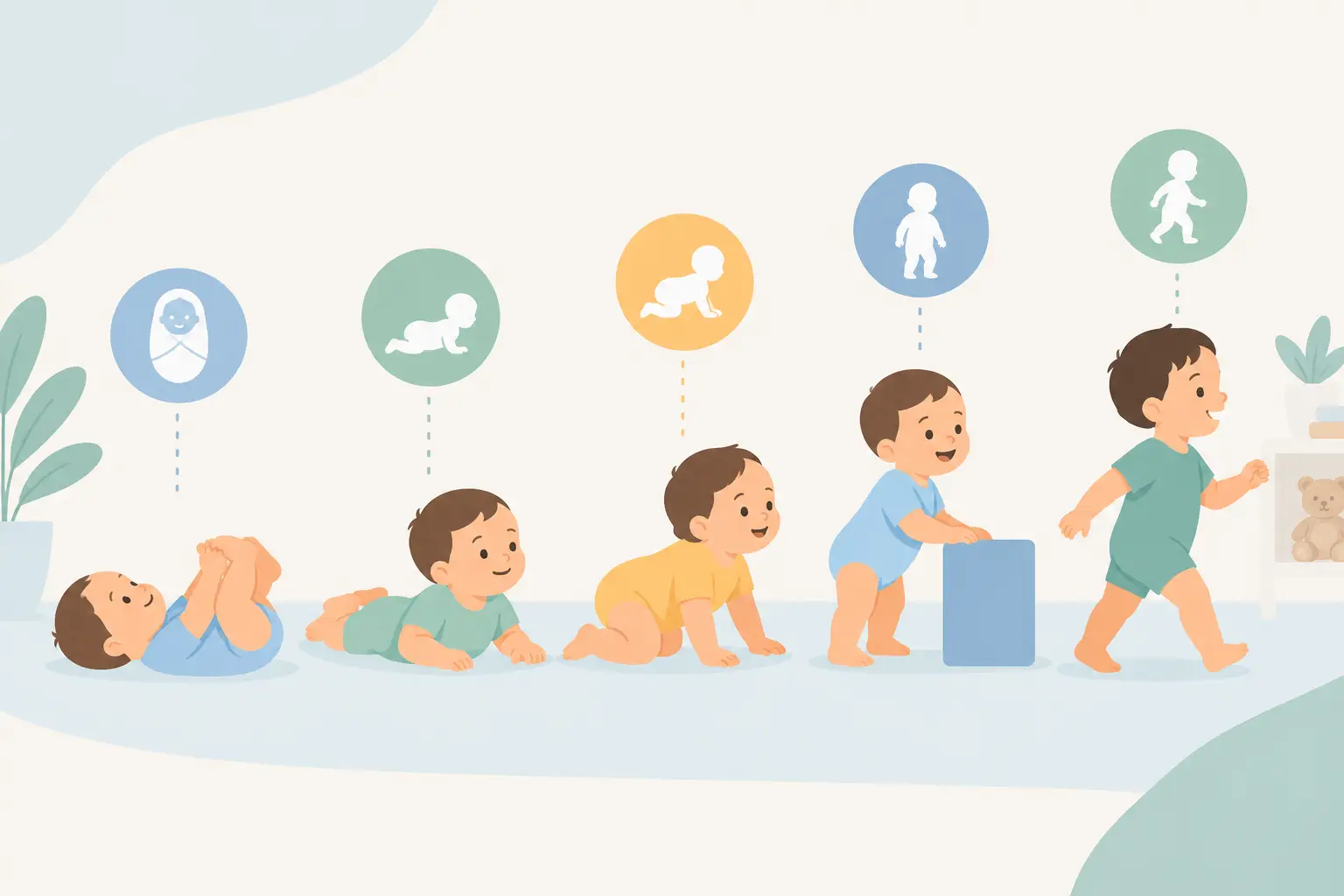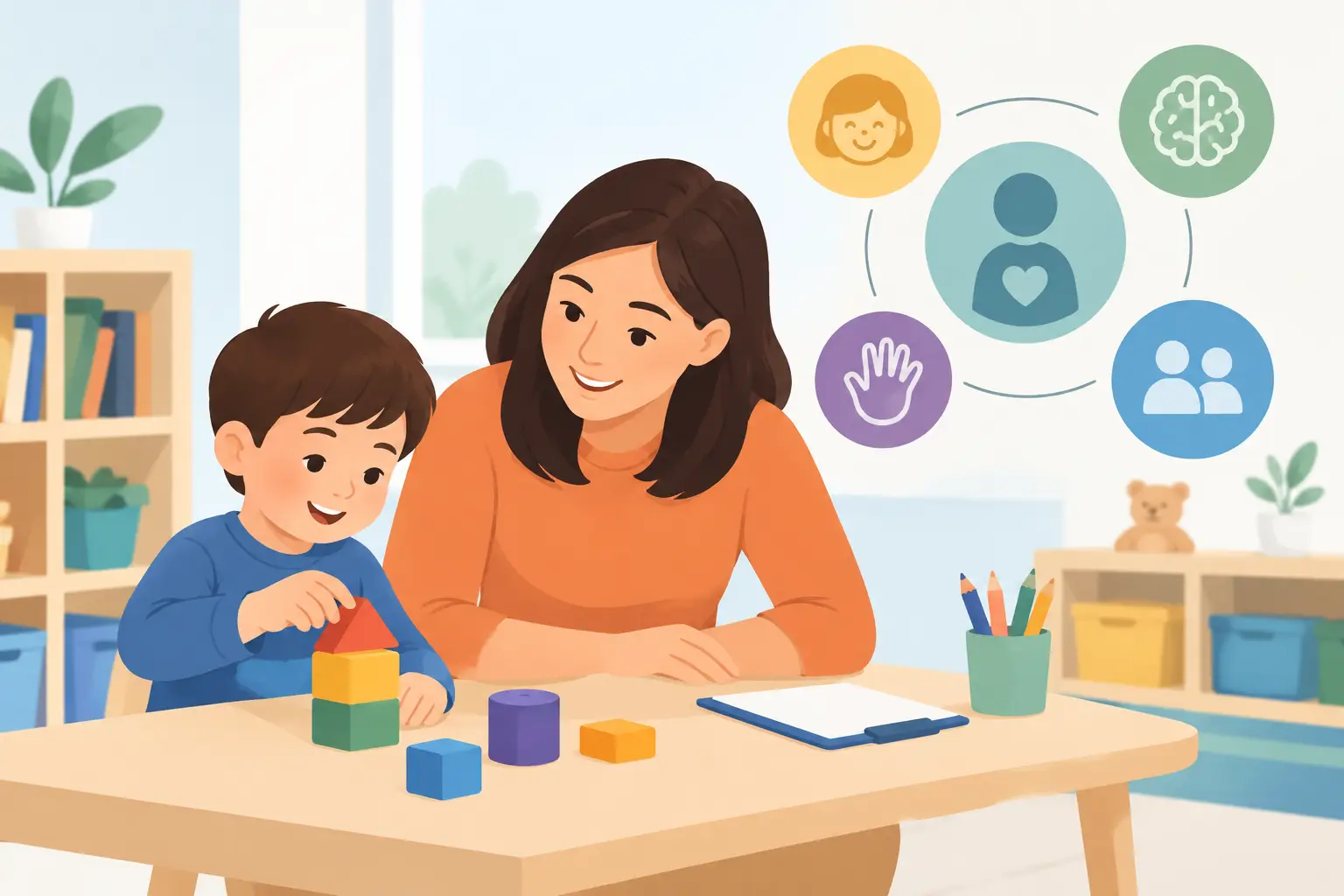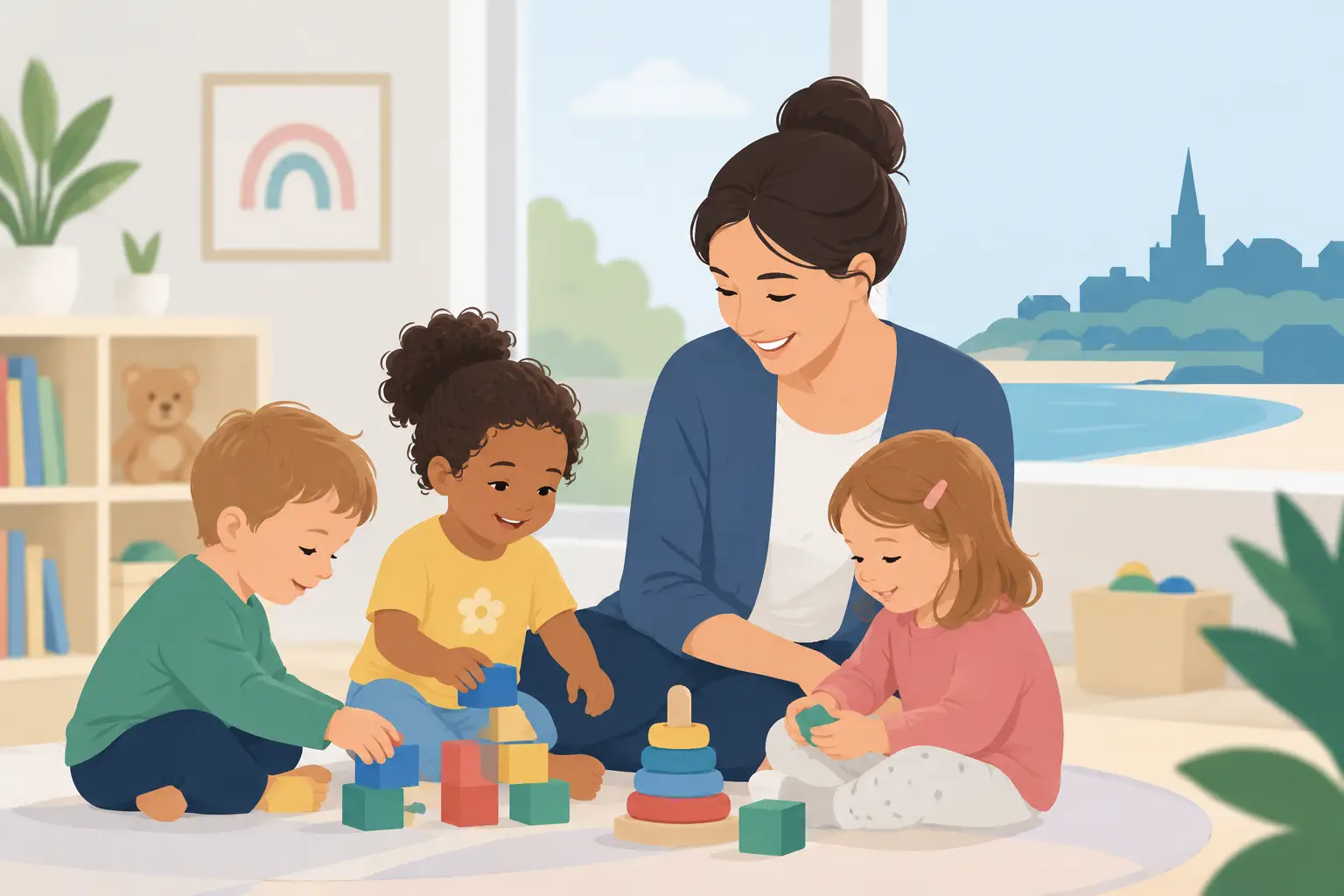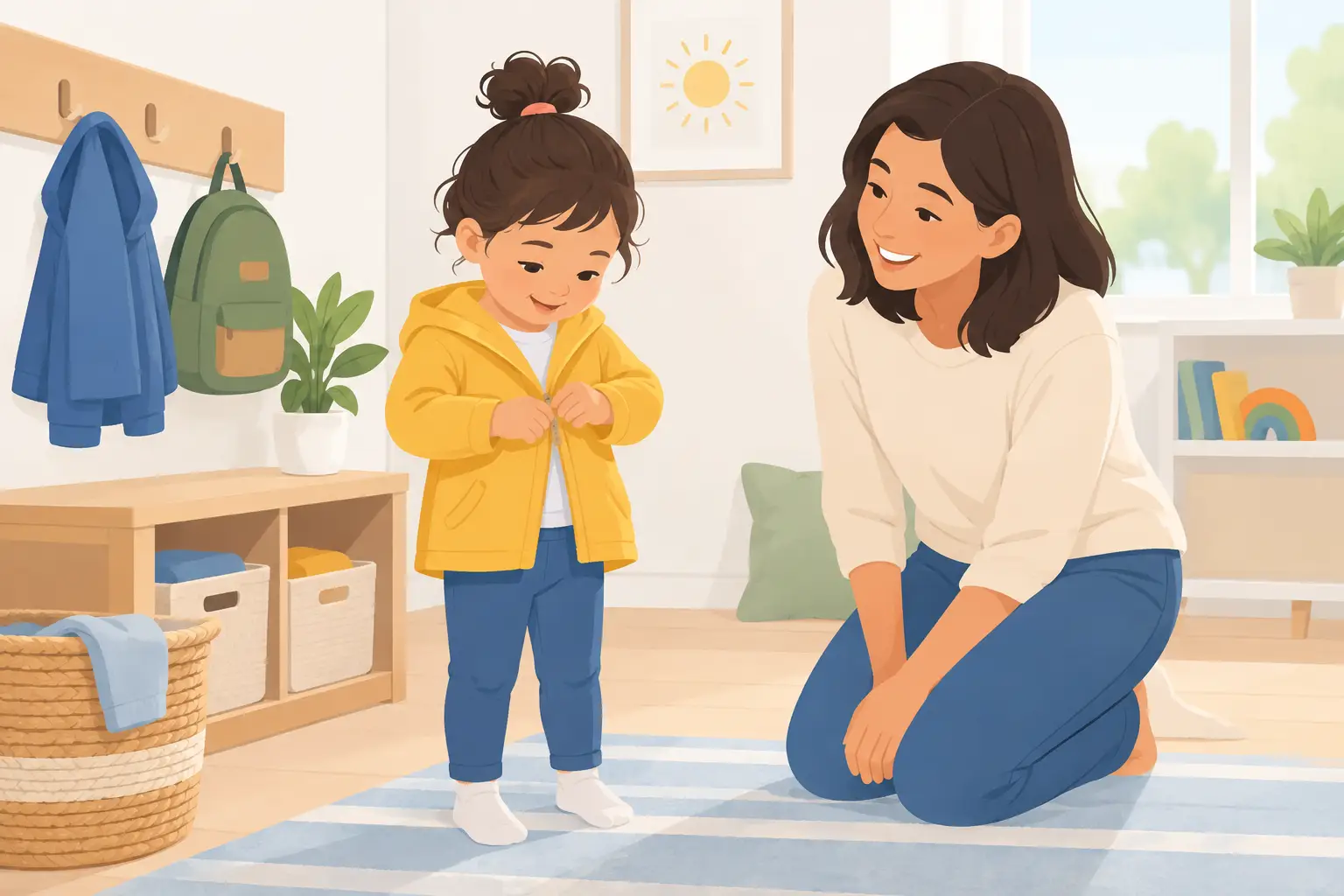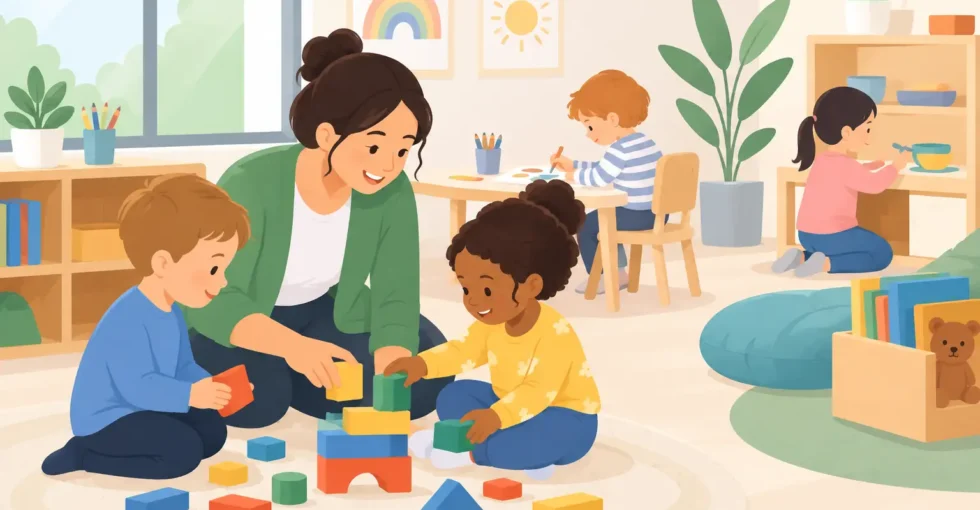

A toddler carefully pouring water between jugs, a baby responding to a familiar song, and a pre-schooler negotiating whose turn it is on the tricycle may look like ordinary nursery moments. They are also meaningful EYFS learning examples. When children feel safe, noticed and free to explore, learning happens through the experiences that matter most to them.
For parents, it can be reassuring to see that early education is not about worksheets or pushing children to do things before they are ready. The Early Years Foundation Stage, often shortened to EYFS, gives nurseries a clear framework for supporting children from birth to age five. It brings together warm, responsive care and purposeful learning, helping each child build the confidence and skills they will carry into school and beyond.
What EYFS learning looks like in practice
The EYFS is built around seven areas of learning and development. The three prime areas – communication and language, physical development, and personal, social and emotional development – are particularly important in a child’s earliest years. They provide the foundations for literacy, maths, understanding the world, and expressive arts and design.
Children do not develop each area separately or at the same pace. A child making a pretend café, for example, may be chatting with friends, counting cups, using a spoon with control, solving a disagreement and inventing a story all at once. This is why thoughtful play, supported by caring adults, is such a powerful part of nursery life.
At Dinotots, the aim is to make these moments feel happy and natural while practitioners remain attentive to what each child is learning, enjoying and ready to try next.
EYFS learning examples across the seven areas
Communication and language
A practitioner might sit alongside a young child looking at a picture book and pause after asking, “Where has the dog gone?” Rather than rushing to supply the answer, they give the child time to point, gesture, make a sound or use words. The adult repeats and extends what the child says: “Yes, the dog is hiding behind the tree.”
For older children, language may grow through a small-world dinosaur scene, a circle-time rhyme or a conversation at lunch. New vocabulary is woven into real experiences, such as describing something as “enormous”, “smooth” or “fragile”. The point is not to test children. It is to help them feel heard and give them richer language to express their ideas.
Physical development
Physical development includes both large movements and the small, precise movements children need for daily independence. Outside, a child may climb a low structure, balance along a beam or learn to pedal. These experiences develop coordination, strength and confidence in manageable steps.
Indoors, playdough, tweezers, chunky puzzles and painting can strengthen hands and fingers. So can everyday routines: fastening a coat, washing hands, pouring their own drink or using a fork at mealtimes. A child will not always want to attempt a new skill immediately. Gentle encouragement works best when it is balanced with enough time to practise without pressure.
Personal, social and emotional development
This area begins with secure relationships. A baby who is comforted by their key carer learns that their feelings are understood. A two-year-old who is helped to name disappointment after another child takes a toy is learning that big emotions can be managed safely.
A simple turn-taking game offers another useful example. Children may find waiting difficult, especially when they are excited. An adult can acknowledge this – “You really wanted the red car” – while calmly supporting them to wait, choose another option or ask for a turn. Over time, these repeated interactions build resilience, empathy and self-belief.
Literacy
Early literacy is much more than recognising letters. It starts with enjoying stories, songs, rhythm and conversation. Children may join in with a repeated phrase in a favourite book, use marks to make a “shopping list” in role play, or spot their name on a coat peg.
Practitioners create opportunities for children to see that writing has a purpose. A child making a birthday card or adding a sign to a block tower is communicating an idea. When children show interest in sounds and letters, adults can build on it through playful activities. If a child is not there yet, sharing books and talking together remains valuable learning.
Mathematics
Mathematical thinking appears throughout a well-planned nursery day. At snack time, children may count out plates and notice whether there are enough for everyone. During construction, they compare the height of two towers or work out why one keeps falling. In the garden, they may fill and empty containers, noticing words such as full, empty, heavier and lighter.
These experiences help children make sense of number, pattern, shape, space and measure. Reciting numbers is a useful step, but understanding grows when children use maths for a real reason. A child who says, “We need one more cup,” is connecting counting to the world around them.
Understanding the world
A tray of ice, a walk to look for changing leaves, or planting cress seeds can lead to curiosity and careful observation. A practitioner might ask, “What do you think will happen?” before placing ice in the sunshine. Children can then return to see what has changed and talk about their ideas.
Understanding the world also includes people, communities and technology. Children may share family traditions, use a tablet with an adult to take photographs of their model, or learn about the roles people have in their local community. The best activities start with what children already know and invite them to wonder a little further.
Expressive arts and design
Creative learning is not judged by whether every painting looks the same. It is about children exploring materials, making choices and expressing themselves. One child may mix colours at an easel, while another turns boxes into a rocket and explains where it is travelling.
Music, movement, imaginative play and messy play all belong here. An adult might provide scarves and music, then follow the children’s ideas as they dance like rain, animals or superheroes. There may be a clear learning intention, but children should still have room to lead the play.
Why routines matter as much as activities
Some of the strongest EYFS learning examples happen during moments parents might not think of as “education”. Greeting a key carer in the morning supports belonging and communication. Helping tidy toys develops responsibility and sorting skills. Sharing a meal encourages independence, conversation and healthy habits.
Predictable routines are especially valuable for young children. Knowing what happens next can make a busy nursery day feel like an oasis of calm. From that secure starting point, children are more willing to try a new food, join a group activity or explore an unfamiliar area of the room.
This does not mean every day must run identically. Children need flexibility too: extra comfort after a difficult morning, more time outdoors when a group is fully engaged, or a quiet space when someone needs a break. High-quality practice is organised, but always responsive to the child in front of the practitioner.
How practitioners turn play into progress
The adult’s role is not to take over children’s play. It is to notice, listen and decide when support will help. Sometimes that means joining in with a question. Sometimes it means adding a new resource, modelling a word, or stepping back so a child can persist independently.
Observations help practitioners understand each child’s interests and developmental journey. If a child repeatedly lines up vehicles, a practitioner may introduce ramps, road signs or different-sized vehicles to extend their thinking. If another is fascinated by insects, a bug hunt, non-fiction books and clay minibeasts may follow.
Parents are a vital part of this picture. The things you share – a new word at home, a favourite song, a change in routine or a growing interest – help nursery staff provide continuity. In return, meaningful updates should tell you more than what your child played with. They should help you see the confidence, friendships and new skills growing beneath the surface.
Supporting EYFS learning at home without turning home into school
You do not need specialist resources to support early learning. Talk about what you can see on the walk home, let your child help match socks from the washing basket, sing familiar songs in the car, and share a story before bed. The most valuable ingredient is often unhurried attention.
Try to follow your child’s interest rather than setting a target. If they love buses, count buses, draw buses, read about buses and talk about where they are going. If they want to repeat the same story every night, that repetition is helping them build language, memory and confidence.
Every child’s progress will look different, and that is expected. What matters is that they are cared for by adults who know them well, given opportunities to explore, and encouraged to take the next small step when they are ready. Those everyday moments of connection, play and discovery are where a happy foundation for learning begins.