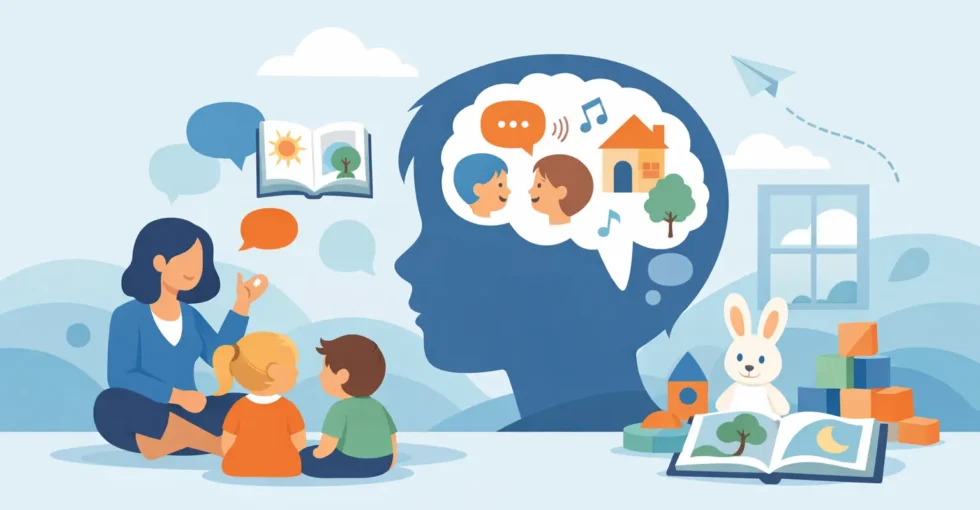

A child who says very little at home may chat happily about the mud kitchen, a favourite story or a new friend after a few weeks at preschool. That is often the quiet magic of being part of a nurturing early years community. How preschool supports language development is not simply about teaching new words. It is about giving children many safe, meaningful reasons to listen, understand, respond and share what is on their mind.
For young children, communication grows through relationships. When they feel known, settled and encouraged, they are more likely to take the small risks that language requires: trying an unfamiliar word, joining a conversation or explaining how they feel.
How preschool supports language development every day
Language is woven through a good preschool day. At arrival, a practitioner might welcome a child by name and ask about their journey. At snack time, children talk about what they can see, taste and choose. Outside, they negotiate whose turn it is with the trikes, describe a wobbly tower or call a friend over to investigate a minibeast.
These may sound like ordinary moments, but they are rich learning opportunities. Adults add language without taking over. If a child points to a puddle and says, “Big water,” a practitioner might respond, “Yes, it is a huge puddle. The rain has made it very deep.” The child is heard, their message matters, and they are offered new vocabulary in a natural context.
This kind of responsive conversation supports more than speaking. Children learn that words help them connect with others, solve problems and make sense of their experiences. They also begin to understand the back-and-forth rhythm of conversation: listening, waiting, responding and taking turns.
Warm relationships give children confidence to talk
A dedicated key carer is especially valuable for language development. They learn a child’s interests, gestures, family routines and preferred ways of communicating. For a child who is shy, new to group care or still building confidence with speech, that familiar relationship can make all the difference.
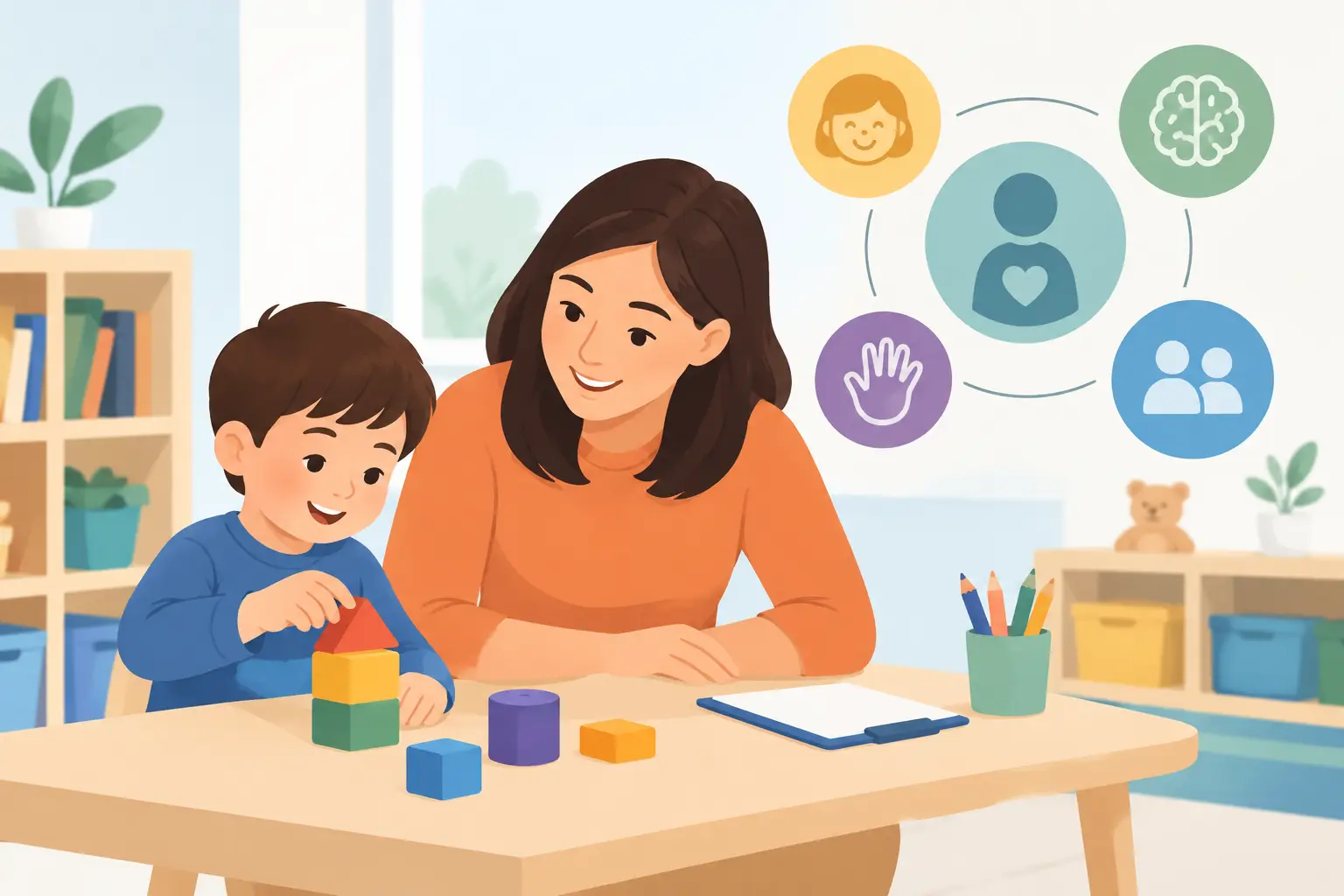
Rather than pressuring a child to speak, skilled practitioners create space. They get down to the child’s level, allow time for an answer and show genuine interest in what the child is communicating, whether through words, facial expressions, pointing or play. This helps children feel secure enough to join in at their own pace.
It also means families and practitioners can share useful observations. Parents know their child best, while early years teams see how they communicate with peers and in a busy group setting. Together, they can celebrate progress and spot when a child may benefit from extra support.
Stories, songs and rhymes build a strong foundation
A well-loved story does much more than fill a calm part of the day. As children hear repeated phrases, predict what happens next and talk about the characters, they build vocabulary, attention and an understanding of how stories work.
Songs and nursery rhymes are equally valuable. Their repetition and rhythm help children hear the patterns and sounds within words. Clapping syllables, joining in with actions and changing the words to make a rhyme playful all support the listening skills that later help with reading and writing.
The best approach is not about racing through a long list of books or expecting every child to sit still for the same length of time. Some children will be captivated by a group story, while others may gain more from sharing a book quietly with an adult. A caring preschool offers both, following children’s interests while introducing them to a wide range of language.
Play gives words a purpose
Children learn language most powerfully when it helps them do something they want to do. In imaginative play, a cardboard box becomes a spaceship, a café or a vet’s surgery. Children use words to decide roles, make plans and keep the shared game going.
A practitioner can extend this without directing it too closely. In a pretend café, they may introduce words such as “menu”, “order”, “ingredients” and “bill”. In construction play, they might talk about “balance”, “higher”, “underneath” and “strong”. The aim is not to test children. It is to enrich the play they already enjoy.
Outdoor experiences offer different language again. Gardening, den building, water play and searching for bugs invite children to observe closely and describe change. They learn words such as “smooth”, “rough”, “floating”, “melting” or “sprouting” because those words relate to something real in front of them.
Group play also develops social communication. Children practise asking to join in, expressing a disagreement, listening to another idea and finding a solution with support. These are essential communication skills for school and for everyday life.
Small groups help every voice be heard
Large-group activities can be enjoyable, but they do not suit every child or every stage of development. Small-group experiences give practitioners a better chance to notice who is joining in, who may need more time and which words or concepts need revisiting.
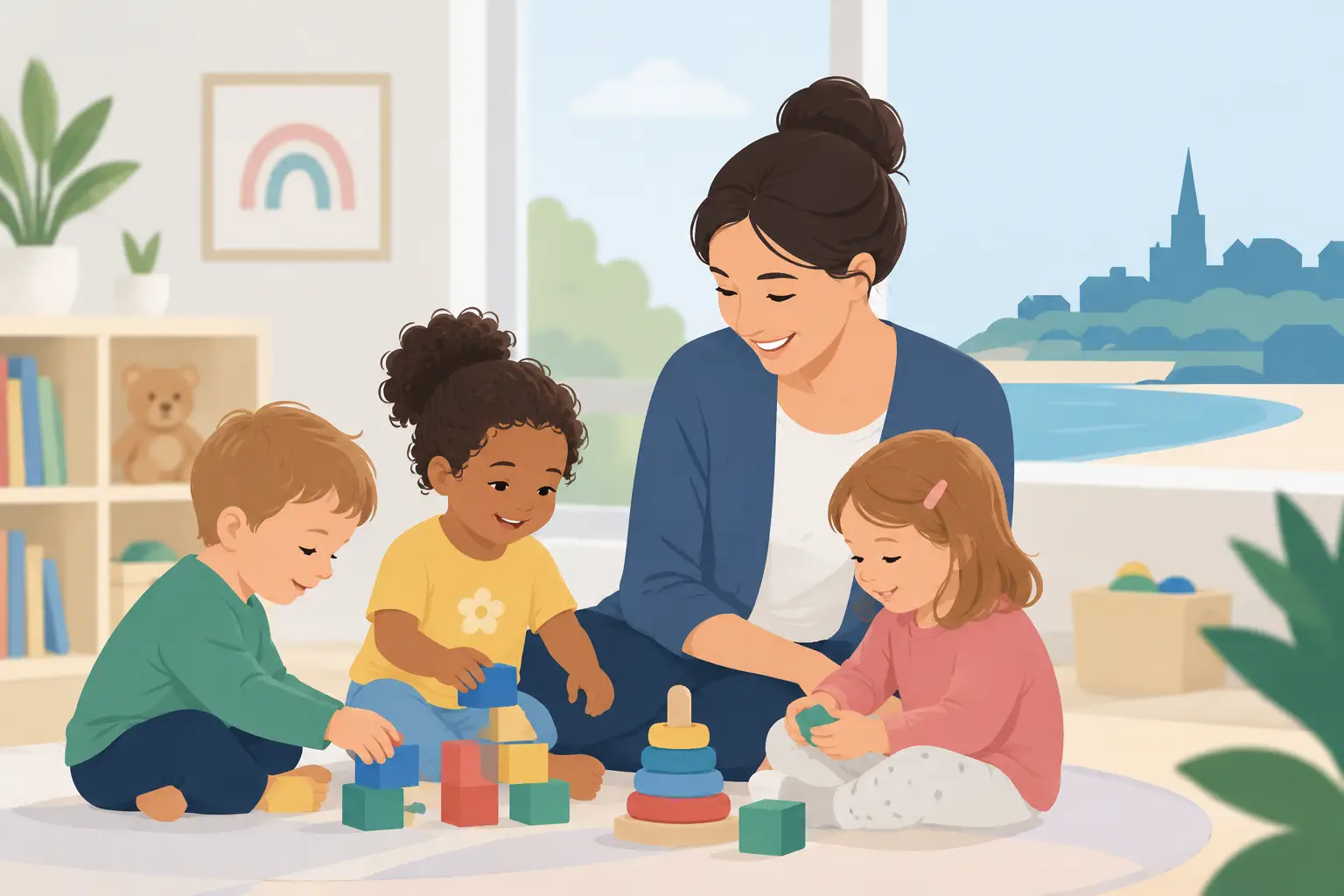
For example, a small group might make fruit salad, talk about the colours and textures, follow simple instructions and explain what they prefer. Another group may retell a familiar story with puppets. Children who do not yet want to speak in front of everyone can still contribute by choosing an object, copying an action or sharing a word with a trusted adult.
This careful observation is part of quality EYFS practice. Practitioners use what they see and hear to plan inviting experiences that build on each child’s next steps, rather than expecting all children to develop in exactly the same way.
Listening and understanding come before longer sentences
Parents naturally notice new words and clearer speech, but receptive language matters too. This is a child’s ability to understand what they hear: a familiar instruction, a question, a story or a friend’s idea.
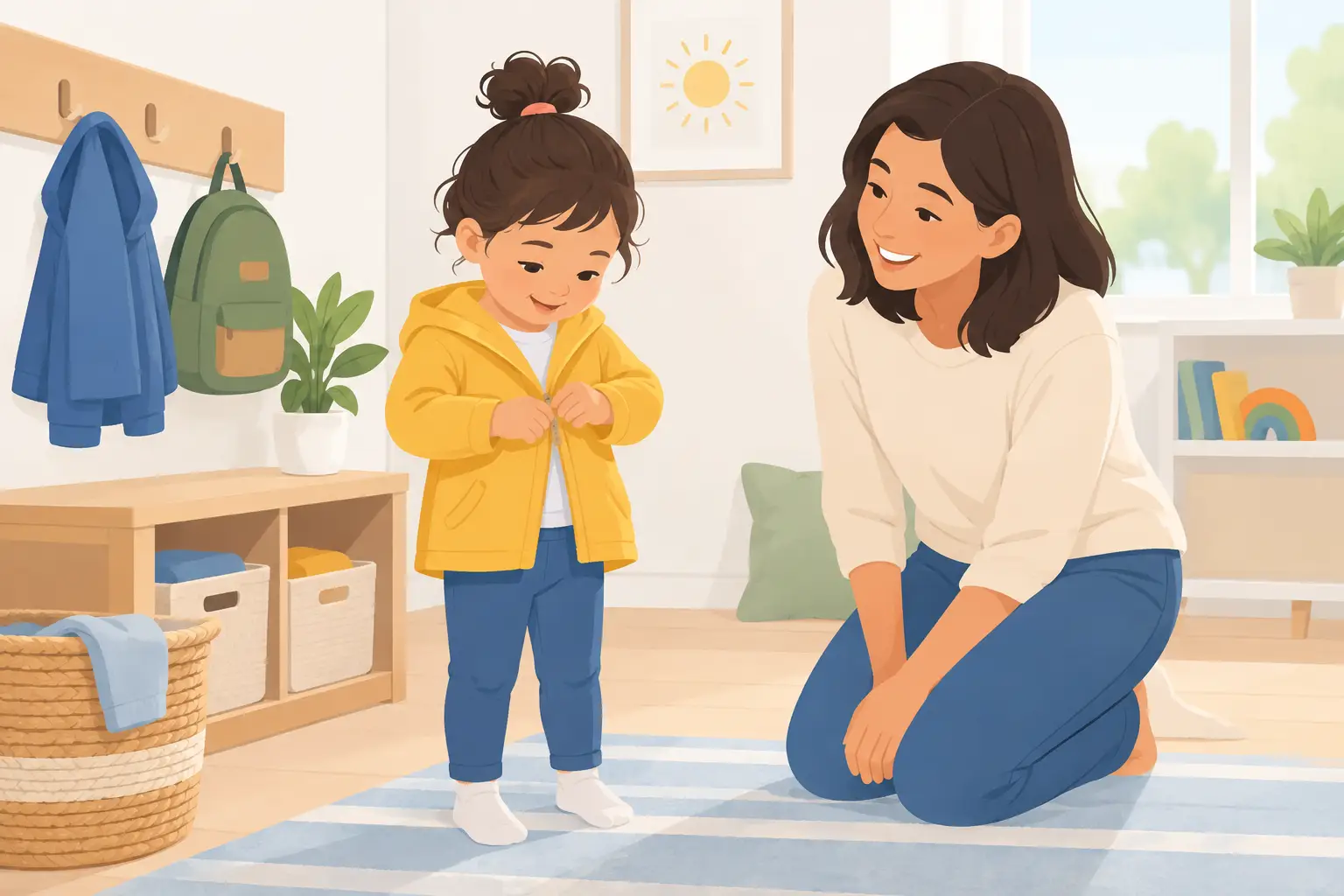
Preschool routines support this gently and repeatedly. Children hear language linked to actions: washing hands, putting on coats, tidying resources and preparing for lunch. Visual cues, songs and consistent wording can help children understand what is happening next, particularly when they are still developing confidence with language.
Practitioners can make instructions manageable by using short phrases, showing as well as telling, and giving children time to process. As understanding grows, language can become more complex. A child who first follows “find your coat” may later understand, “Please find your coat, then choose your hat from the basket.”
There is a balance to strike. Children need enriching language, not a constant stream of adult talk. Quiet pauses are valuable because they give children time to think, respond and lead the interaction themselves.
Supporting children with different communication needs
Children develop language at different rates. Some are talkative early on; others spend more time watching and listening before their words take off. A child learning more than one language may use vocabulary differently across home and preschool, which is a strength to be welcomed rather than a problem to be corrected.
A thoughtful setting respects each child’s home language, culture and family story. Learning key words from home, sharing familiar songs or inviting parents to contribute favourite books can help children feel a strong sense of belonging. A secure sense of identity supports confident communication.
Sometimes a child may need more targeted help with speech, language or understanding. Early years practitioners should share observations sensitively with parents and, where appropriate, work alongside relevant professionals. Early support is not about labelling a child. It is about making sure they have the right encouragement and strategies to thrive.
At Dinotots, this partnership matters. Regular communication helps parents understand not only what their child has done during the day, but how they are growing in confidence, friendships and communication.
Simple ways to continue language learning at home
Preschool and home do not need to mirror one another. Family life already offers plenty of opportunities for meaningful talk. Describe what you are doing while cooking, let your child help choose fruit at the shop, sing familiar songs on the way home or look at a book together before bed.
Try to follow your child’s interest rather than asking lots of questions in a row. If they are fascinated by a digger, talk about where it is going, the noise it makes and what it might be building. If they show you a picture from preschool, wait for their explanation before adding your own words.
Most importantly, keep communication enjoyable. Children learn best when talking feels like connection, not a performance. With loving encouragement at home and skilled support at preschool, every new word, question and story becomes part of a growing confidence that will carry them well beyond their early years.