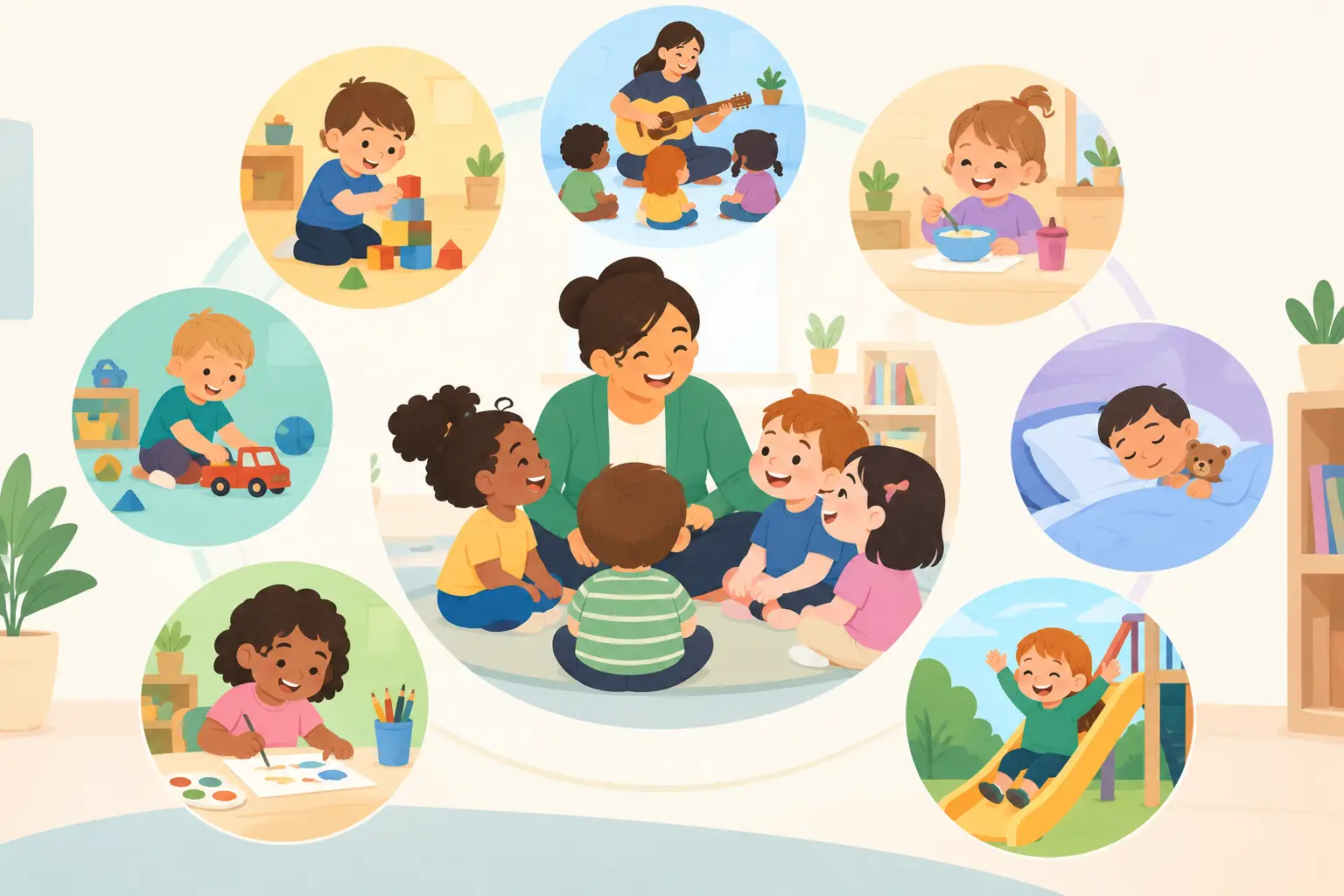

The first weeks in a nursery baby room can feel like a big step for the whole family. Your baby is beginning relationships beyond home, while you are trusting someone else with the rhythms, comforts and little details that make them feel safe. This guide to baby room care explains what thoughtful, high-quality care should look like, and how it supports both your baby’s happiness and your peace of mind.
What baby room care should feel like
A well-run baby room is not simply a place where babies are fed, changed and put down for naps. Those needs matter enormously, but excellent care also means being known as an individual. Practitioners learn how each baby communicates, whether that is through a particular sound, a change in expression, reaching up to be held or needing a quiet moment after a busy activity.
The room should feel calm without being silent, warm without being overstimulating, and purposeful without asking babies to grow up too quickly. Babies learn through secure relationships and everyday experiences: watching a familiar adult sing, feeling the texture of a natural object, sharing a smile during nappy changing, or finding they can reach a toy for themselves.
At nursery, this care is usually led by a dedicated key person. This adult helps your baby build a close, reassuring connection and becomes someone who understands their routines, interests and developing personality. A key person also gives parents a consistent point of contact, making handovers and conversations feel more personal.
A guide to baby room care: safety in every routine
Safety is the foundation of good baby room care, but it should never make a room feel clinical or restrictive. Strong procedures work quietly in the background, allowing babies the freedom to explore while adults remain attentive and prepared.
Nursery teams should follow clear safeguarding, health and safety, food hygiene and sleep procedures. Staff need appropriate training, including paediatric first aid, and they should know exactly what to do if a baby becomes unwell, has an accident or needs urgent support. Secure arrival and collection arrangements are equally important, particularly when different family members may collect at different times.
Sleep deserves special attention. Babies have individual sleep patterns, and a nursery should work with parents to understand what helps their child settle. Safe sleep arrangements include suitable cots, regular checks and clear records of when and how long a baby has slept. Some babies settle quickly in a cot, while others need more time, gentle reassurance or a familiar sleep cue. There is no one-size-fits-all routine, but every approach should be safe, consistent and agreed with parents.
Nappy changing and feeding are also moments of care and connection, not jobs to rush through. A caring practitioner talks to the baby, responds to their expressions and protects their dignity. Families should be kept informed about bottles, meals, nappies, naps and any changes in mood or wellbeing, so home and nursery can work together.
Clean spaces, healthy babies
Babies naturally explore with their hands and mouths, so cleanliness needs to be built into the day. Toys, highchairs, changing areas and shared surfaces should be cleaned appropriately and checked regularly. At the same time, babies need meaningful sensory play. A carefully supervised messy activity, such as water play or edible texture exploration, can be wonderful for development even if it involves a little splashing.
Good infection-control routines help reduce the spread of common illnesses, although no childcare setting can prevent every cold. Honest communication matters here. Parents need to know when their child is unwell, while staff need accurate information about symptoms, medicines, allergies and recent illnesses. Clear exclusion guidance may occasionally be inconvenient for working families, but it protects the wellbeing of babies, families and staff across the setting.
Responsive routines build emotional security
A predictable day helps babies make sense of their world. Familiar sequences – arriving, playing, eating, sleeping, cuddling and going home – give a baby security even before they understand the words for what is happening next.
That does not mean every baby should be placed on exactly the same timetable. Younger babies may need bottles or naps at different times, while older babies may begin to enjoy a more shared routine around meals, stories and outdoor play. The best nursery rooms balance the needs of the group with careful attention to each child.
Responsive care means adults notice and act. If a baby turns away, rubs their eyes or becomes unsettled, a practitioner considers what they may need rather than expecting them to carry on. If they are fascinated by stacking cups, posting objects or looking at pictures of faces, the adult follows that interest and adds language, encouragement and time.
This approach supports early confidence. Babies begin to trust that adults will respond, that their feelings matter and that the world is an interesting place to investigate. These are powerful early foundations for communication, independence and future learning.
Play with purpose, without pressure
Babies do not need worksheets, long group sessions or a room full of flashing equipment. They need attentive adults, safe opportunities to move and a rich range of simple experiences that invite curiosity.
Tummy time, crawling routes, treasure baskets, songs, mirrors, books and sensory materials all support development in different ways. Through play, babies practise coordination, discover cause and effect, hear new words and begin to engage with other children. Outdoor experiences are valuable too. Fresh air, changing weather, natural light and space to move can support wellbeing as well as physical development.
The Early Years Foundation Stage helps practitioners observe what babies can do and plan their next experiences. This should not feel like a test or a race towards milestones. Development is not always neat or even. One baby may be eager to climb before they say many words; another may spend weeks watching closely before joining in. Skilled staff recognise progress in small moments and share it with families.
Language begins long before first words
Conversation in the baby room matters. Practitioners name what babies can see and feel, sing familiar songs, read short books and pause for babies to respond with a look, gesture or babble. These back-and-forth exchanges help build communication from the earliest months.
Home languages, favourite songs and family traditions can be part of this too. When a nursery welcomes what matters at home, babies experience a stronger sense of belonging and parents can feel confident that their child’s identity is respected.
The partnership between home and nursery
The best baby room care is a partnership, not a handover at the door. Parents know their babies best, and nursery practitioners bring professional knowledge of early development and group care. Both perspectives are valuable.
A settling-in period gives everyone time to build trust. Some babies are ready to explore quickly, while others need a slower introduction with shorter visits and familiar comfort items where appropriate. Separation can be emotional for parents as well as babies. A caring team will listen, explain what to expect and provide reassurance without dismissing those feelings.
Daily updates should cover the practical details, but meaningful communication goes further. You may want to hear what made your baby laugh, which song they enjoyed or how they approached a new activity. Likewise, tell the team if sleep has been difficult, if a new tooth is coming through or if there has been a change at home. Small pieces of information can make a real difference to your baby’s day.
If you have a concern, raise it early. A dependable nursery welcomes respectful questions about routines, meals, sleep, staff cover or your child’s progress. Trust grows when communication is clear, kind and followed by action.
Choosing care that gives your family confidence
When visiting a baby room, notice how adults are with the children rather than focusing only on the displays. Are babies comforted promptly? Do practitioners get down to their level, speak gently and show genuine interest? Is the room organised so babies can safely explore, rest and eat? Do staff appear calm, attentive and familiar with each child?
Ask how key person relationships work, how sleep and feeding routines are managed, and how the setting keeps parents updated. It is also reasonable to ask about staff qualifications, safeguarding arrangements, ratios and how the nursery supports children as they move into the next room.
For working families, dependable care is practical as well as emotional. Clear opening hours, reliable communication and a team that understands the realities of family life can ease the daily pressure. At Dinotots, the aim is for every child to feel secure enough to explore, learn and be happy, while parents leave each morning with confidence in the care around them.
Your baby does not need a perfect day, every day. They need warm, responsive adults, familiar routines and the chance to be themselves. When those things are in place, nursery can become a trusted extension of home – a small, caring community where your baby is safe to grow.