
The school bell may ring at 3pm, but the working day rarely ends there. For many families, the few hours between school finishing and home time are where the real juggling begins. Choosing an afterschool club versus childminder is not simply about who can collect your child. It is about finding a place where they feel safe, settled and genuinely happy while you finish the day with confidence.
Both options can offer valuable care, and the right choice depends on your child’s personality, your family routine and the kind of support you need. Some children thrive in a lively group of friends, while others feel most at ease in a smaller, home-from-home setting. Looking beyond the timetable can help you choose care that works for everyone.
Afterschool Club Versus Childminder: The Main Difference
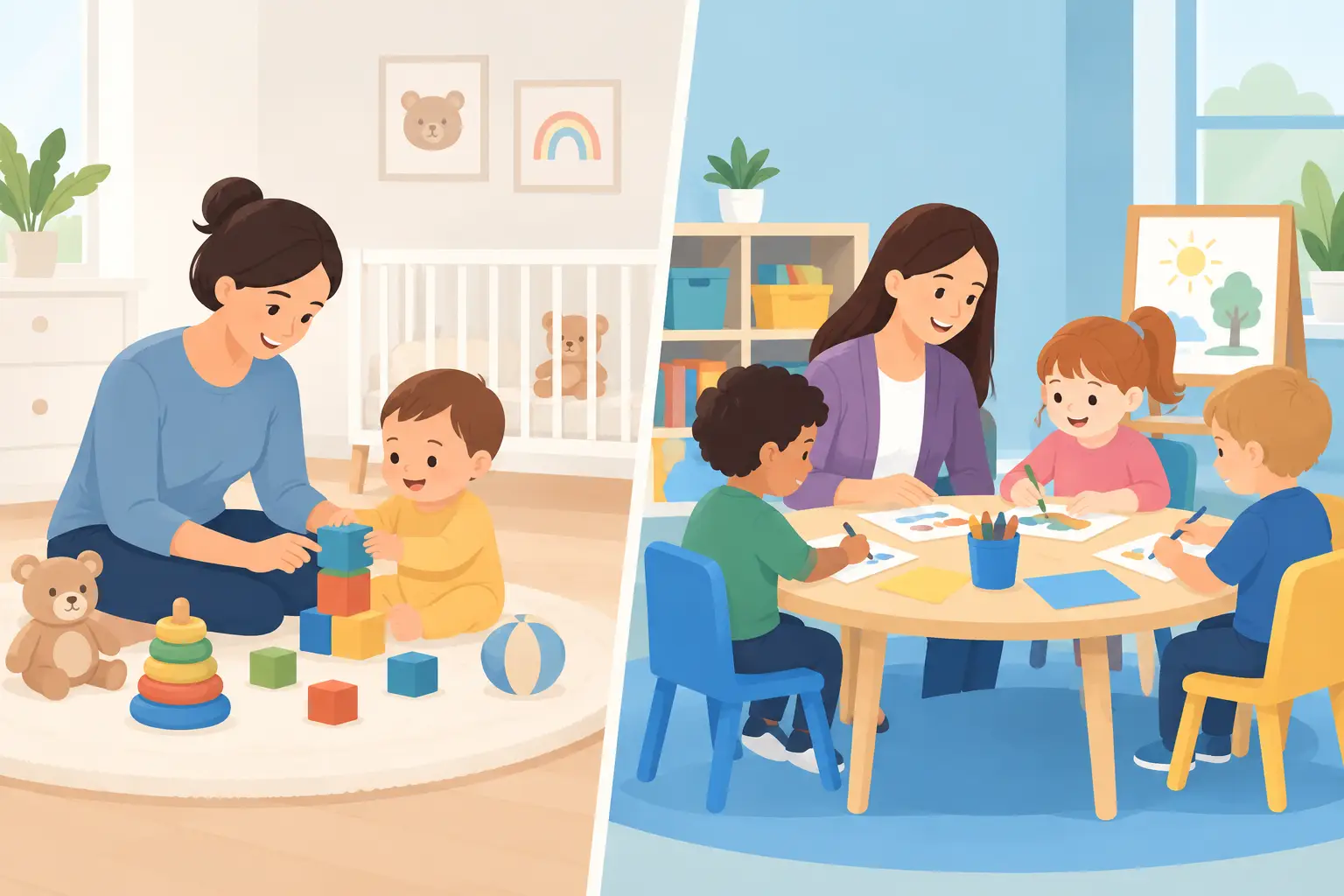
An afterschool club is usually a group setting, often based at or near a school, nursery or community venue. Children are collected from school, offered a snack or meal, and enjoy planned activities, outdoor play and time with friends until collection. It is designed to provide dependable wraparound care around the school day.
A childminder cares for children from their own home and is generally registered and inspected by Ofsted in England. The setting is usually smaller, with children of different ages sharing a more domestic routine. Depending on the childminder’s arrangements, your child may be collected from school and spend the afternoon playing, having a snack and joining in with family-style activities.
Neither model is automatically better. The key difference is often the experience your child has at the end of their school day: a group-based, structured session with an afterschool club, or a smaller and more home-like environment with a childminder.
When an Afterschool Club May Be the Right Fit
For many primary-aged children, afterschool club brings a welcome sense of belonging. They may see familiar classmates, build friendships beyond the classroom and take part in activities they would not have at home. After concentrating at school all day, children often value the chance to choose between crafts, construction, board games, reading, messy play or active outdoor games.
A good club does not make the afternoon feel like an extension of lessons. It should offer a calm transition from the school day, with consistent routines and plenty of space for children to relax. A healthy snack, a familiar member of staff and time to talk about their day can make a real difference to how settled they feel.
Afterschool clubs can be particularly helpful when your working hours are predictable and you need reliable care several days a week. Larger teams may also offer greater cover when a staff member is absent, which can be reassuring for parents whose work commitments cannot change at short notice.
There is a social benefit too. Children learn to share space with different ages, negotiate games, include others and grow in confidence outside their usual friendship group. These everyday moments build independence in a gentle, supported way.
At a well-run provision, safeguarding, supervised handovers, sign-in procedures and staff training sit behind the happy atmosphere. Parents should be able to understand exactly who collects their child, how staff communicate any concerns and what happens if plans change.
Questions to ask an afterschool club
It is worth asking how children are grouped, what the collection arrangements are and how the setting supports children who arrive tired, hungry or overwhelmed. Find out what food is provided, whether outdoor play happens in all seasons, and how the club communicates with parents.
If homework time matters to your family, ask whether there is a quiet area and what support is realistically available. Some children prefer to complete homework at home after a rest, while others appreciate getting started before collection. The best arrangement is the one that removes pressure rather than creating more of it.
When a Childminder May Be the Right Fit
A childminder can be an excellent choice for children who prefer a quieter afternoon or need a more personal transition from school. In a smaller group, your child may develop a close relationship with one familiar adult and enjoy the comfort of a home environment.
This option can suit siblings especially well. Being collected together and spending the afternoon in the same setting may feel reassuring, particularly for younger children adjusting to starting school. A childminder may also offer flexibility around school holidays, early starts or changing work patterns, although this varies from provider to provider.
The smaller number of children can mean routines are shaped more closely around individual needs. A child who needs time to decompress might be able to sit with a book, chat quietly or have a familiar snack before joining play. For some families, that personal pace is exactly what makes the arrangement work.
However, it is sensible to consider the practicalities carefully. If the childminder is unwell, on holiday or has an emergency, what backup is in place? Their capacity is naturally more limited than a larger setting, and arrangements can be affected by their own family commitments. Ask clearly about notice periods, contingency plans and whether another registered childminder may provide cover.
Questions to ask a childminder
Ask to see where children eat, play, rest and spend time outdoors. Talk through the school-run routine, including how children travel and what happens in poor weather. It is also helpful to ask about the ages of the other children cared for, daily activities, screen time and how updates are shared with parents.
A warm conversation matters. You are looking for someone who understands your child as an individual, welcomes your questions and can explain their approach to boundaries, behaviour and emotional wellbeing with confidence.
Comparing Cost, Flexibility and Reliability
Fees for afterschool clubs and childminders vary by area, hours and what is included. An afterschool club may charge a set session fee, often including collection, food and activities. A childminder may charge by the hour or offer a contracted session, and additional costs can sometimes apply for meals, activities or holiday care.
Rather than comparing the headline price alone, look at the full arrangement. Does care run late enough for your commute? Are inset days and school holidays covered? Is food included? Will you pay when your child is absent, or when the setting is closed? Clear answers help you budget without unwelcome surprises.
Flexibility can mean different things. A childminder may be able to accommodate an occasional later collection, while an established club may have the staffing and opening hours to provide consistency across every school week. If your work is shift-based or frequently changes, be upfront from the start. It is better to choose a provider whose routine matches yours than to rely on exceptions.
Reliability is also emotional, not just logistical. Your child should know who will meet them at the school gate, what will happen next and when you will arrive. Predictable care gives children security, especially during the first terms of primary school when so much else is new.
Put Your Child’s Experience at the Centre
Before deciding, involve your child in an age-appropriate way. Visit where possible. Notice whether they become curious, relaxed or eager to join in. A confident child may be excited by a busy club with lots of friends, while a quieter child may prefer the reassurance of a smaller group. Their first reaction is not the only factor, but it is useful information.
Think about their whole week too. If they already attend several busy activities, a quieter childminding setting may offer balance. If they are asking for more time with school friends, a club may give them the connection they are missing. Children’s needs can change over time, so the choice does not have to be permanent.
The quality of care matters more than the label on the door. Look for warm, attentive adults, clear routines, safe collection arrangements and a setting where children are treated with respect. Whether you choose a childminder or a group setting such as Dinotots’ wraparound care, the right place should leave your child with stories to share and leave you with genuine peace of mind.
A happy afternoon can make family evenings calmer too. When your child has been cared for, fed and listened to after school, home can be the place where you reconnect rather than rush.