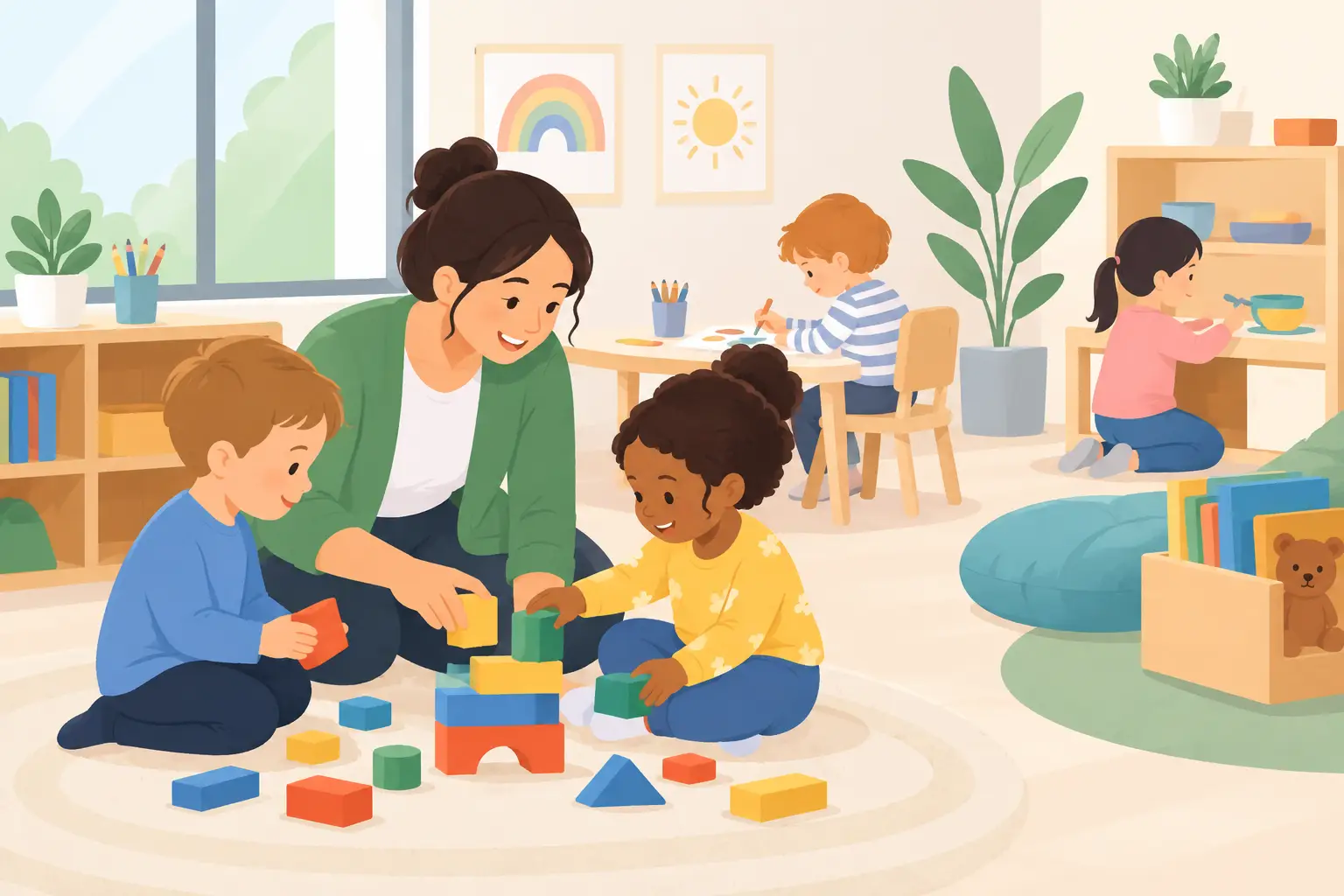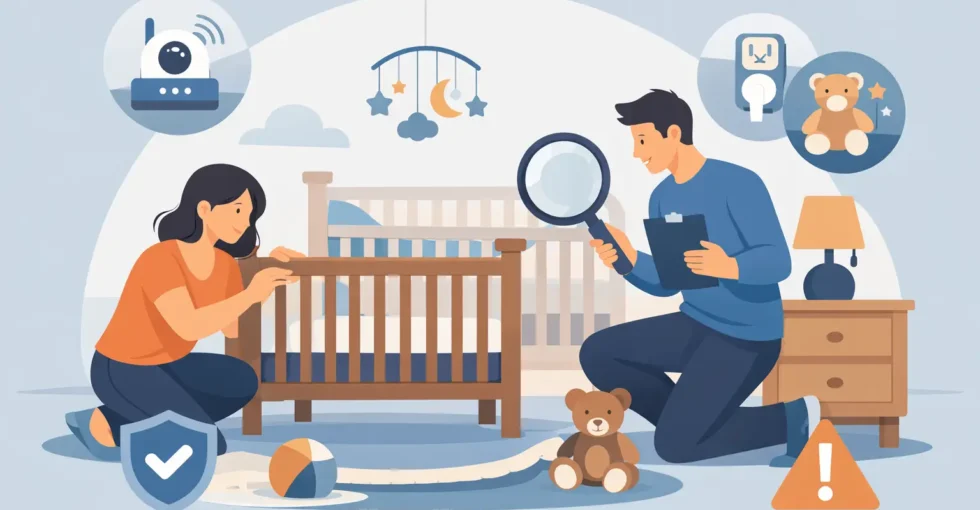

The first few minutes of a nursery visit can tell you a great deal. Are children settled and absorbed in play? Does a practitioner get down to a child’s level when they need comfort? Are visitors welcomed, but also properly checked in? The most useful nursery safety checks parents can make look beyond a tidy room. They help you understand whether safety is part of the setting’s everyday culture.
A safe nursery should feel warm rather than clinical, busy but never chaotic. Children need room to explore, take manageable risks and build independence. Parents need confidence that clear systems, trained adults and thoughtful routines are there whenever a child needs them.
Start with the setting’s safety culture
Safety is not one policy kept in an office. It shows up in the small, repeated actions that protect children throughout the day: a gate being closed behind a family, a practitioner noticing a child is tired, or staff checking who is collecting a child before home time.
During your visit, notice whether staff seem calm, attentive and familiar with the children in their care. In a well-run setting, practitioners are not simply watching a room. They are interacting, anticipating needs and supporting children to play safely. You should see warmth alongside appropriate boundaries.
Ask how the nursery manages arrivals, departures and unplanned visitors. A provider should have clear procedures for signing children in and out, confirming authorised collectors and keeping the premises secure. If someone else needs to collect your child, there should be a reliable process in place rather than an informal arrangement.
It is also reasonable to ask who is responsible for safeguarding and what staff do if they have a concern about a child’s welfare. You do not need a detailed lesson in policy language. What matters is that the answer is clear, confident and child-focused. Staff should know whom to speak to and how to act without delay.
Nursery safety checks parents should make on a visit
Physical safety matters, particularly for babies and toddlers who explore with their hands, mouths and feet. Look around with your child’s curiosity in mind. Are entrances secure? Are cleaning products, medicines and staff belongings stored out of reach? Are radiators, sockets, doors and outdoor areas suitably protected and well maintained?
A nursery does not need to look bare to be safe. Resources should be accessible so children can choose, create and learn. The difference is that equipment is age-appropriate, checked regularly and put away thoughtfully. Small parts should not be within reach of babies, and climbing equipment should be supervised and suited to the children using it.
Outdoor play deserves the same attention as the indoor environment. Ask how the area is checked before children go out, how gates are managed and how staff support climbing, wheeled toys and messy play. Outdoor learning is a valuable part of early childhood, and a good setting balances freedom with active supervision rather than avoiding play that might get muddy or challenging.
Hygiene is another practical sign of strong routines. Notice whether handwashing is built naturally into the day, especially before meals and after toileting or outdoor play. Ask how nappy changing, toileting support and cleaning are managed. The answer should protect children’s dignity as well as their health.
Look closely at supervision and staffing
Children are safest when adults know them well. Ask about staff-to-child ratios, how rooms are staffed at the beginning and end of the day, and what happens when a practitioner takes a break or is absent. Required ratios are a minimum standard. The real question is whether the nursery plans its day so children remain properly supervised during transitions, meals, sleep times and outdoor play.
Continuity matters too. A dedicated key person gives your child a familiar adult who understands their routines, comforts them when needed and shares meaningful updates with you. For a baby starting nursery, this relationship can make the difference between a difficult handover and a reassuring routine. For older children, it helps ensure their interests, friendships and growing confidence are noticed.
You can also ask about recruitment and training. In an England-based nursery, staff should be appropriately checked and suitable to work with children, with safeguarding, paediatric first aid and other relevant training kept up to date. A trustworthy provider will be open about how it recruits, supervises and develops its team.
Do not be concerned if staff are guiding children through a disagreement, reminding them to walk indoors or helping them use scissors carefully. These moments are part of safe, respectful early learning. Constant shouting, distracted adults or children repeatedly left without support are different matters and deserve further questions.
Ask how the nursery responds when something changes
Even in a carefully managed environment, children can become unwell, trip while running or feel upset by a new routine. What reassures parents is not a promise that nothing will ever happen. It is evidence that the setting responds quickly, communicates honestly and learns from incidents.
Ask what happens if your child has a bump, develops a temperature or needs medication during the day. Find out when parents are contacted, how accidents are recorded and whether you will be asked to acknowledge the information. Clear records protect children and give families a truthful picture of their day.
Food safety is especially important if your child has an allergy, dietary requirement or cultural preference. Discuss how meals are prepared, how allergens are managed, and how staff make sure the right food reaches the right child. It is worth asking about snacks, packed lunches where relevant and weaning for babies too. A good nursery will welcome these conversations because details matter.
Sleep arrangements need particular care for babies and young toddlers. Ask where children sleep, how often they are checked, how sleep is recorded and how the nursery follows safer sleep guidance. Talk through your child’s current routine, comforter and settling needs. Consistency between home and nursery is not always possible, but a thoughtful plan can help a child feel secure.
Notice the quality of communication
Parents should never feel they are bothering a nursery by asking about their child. From the first enquiry onwards, communication should be kind, clear and organised. You need practical information about meals, naps, activities and minor accidents, but you also deserve insight into your child’s happiness and development.
Ask how updates are shared and who you can speak to if something is worrying you. Some families prefer a quick daily handover; others value written updates alongside a conversation at collection. The right approach depends on your family, but it should never leave you guessing whether your child has eaten, slept or settled.
Pay attention to how staff speak about the children during your visit. Do they use names? Can they explain what children enjoy and what they are currently learning? This is a quiet but powerful sign that the nursery sees each child as an individual, not simply as a place on a register.
Check that policies work for real family life
Written policies matter, but they must be practical in the moments families actually face. Ask about illness exclusions, late collection, emergency contacts, complaints and settling-in sessions before you enrol. A provider should explain expectations clearly and fairly, while recognising that family life can occasionally be unpredictable.
If you are considering wraparound or holiday childcare for an older child, ask how handovers to and from school are managed, who collects children and how attendance is checked. The routine may look different from a baby room, but the principles are the same: children should be accounted for, supported and known by the adults responsible for them.
For families in Blyth, Cramlington, Ashington, Morpeth or Bedlington, visiting at a normal part of the day can be particularly helpful. You can see the rhythm of arrivals, meals, play and collection rather than relying on a perfectly quiet appointment. At Dinotots, we believe peace of mind comes from caring relationships backed by dependable routines.
Trust your observations, but give yourself permission to ask direct questions too. The right nursery will not expect you to know every policy before you walk through the door. It will help you feel informed, listened to and confident that your child has a safe place to grow, belong and enjoy each day.