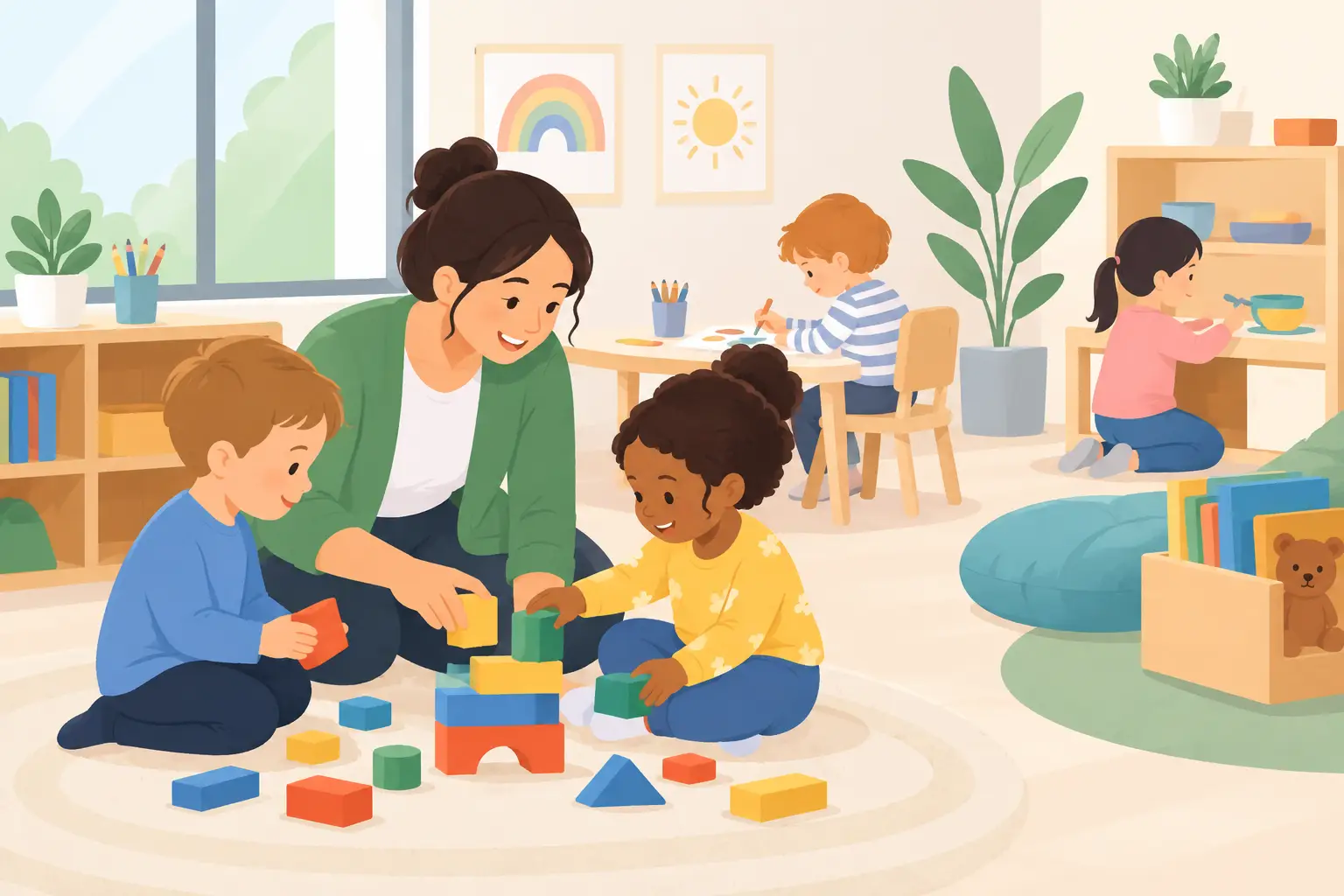

For parents searching “nursery Blyth”, the choice is about far more than finding a place that fits the working day. You are looking for people who will notice your child’s favourite story, understand their little worries, celebrate new skills and offer the same calm reassurance you would give at home. At the same time, you need reliable hours, clear communication and confidence that your child is safe, learning and happy.
That is a big decision, and it deserves more than a quick look at a timetable. The right nursery can become a trusted part of family life: a place where children feel they belong and parents can begin the day knowing their child is in capable, caring hands.
What a nursery in Blyth should give your family
Every family’s routine looks different. Some parents need full-day care from the earliest months, while others are looking ahead to preschool learning, wraparound care or school-holiday support. A good nursery recognises that childcare must work practically as well as emotionally. Consistent opening hours, well-organised handovers and a dependable team can make a genuine difference to a busy morning.
Yet convenience alone is not enough. Children thrive when their day has a reassuring rhythm. They need warm welcomes, familiar adults, time to play freely and gentle encouragement to try something new. They also need a setting where their health, safety and emotional wellbeing are treated as daily priorities, not promises on a brochure.
For many families in Blyth, the most valuable childcare relationship is one that grows with their child. From early settling-in days to the move towards school, parents should feel listened to and included at every stage.
A key person who truly knows your child
A dedicated key carer gives a child a secure base in a new environment. This is the adult who gets to know how they like to settle, what makes them laugh and when they may need extra reassurance. That relationship is especially meaningful for babies and younger toddlers, who are still learning that their parent will return after goodbye.
It also gives parents a familiar person to speak with. Rather than receiving only a brief update at collection time, you should feel able to share changes at home, ask questions and hear about the small moments that make up your child’s day. Perhaps they joined in with a song for the first time, comforted a friend or persisted with a tricky puzzle. These details show that staff are seeing the child behind the routine.
Learning that feels like childhood
Early education should never feel like formal school arriving too soon. The Early Years Foundation Stage provides an important framework for children’s learning and development, but the best experiences are woven naturally into play, conversation, movement and everyday routines.
A muddy outdoor investigation can build language, curiosity and physical confidence. Preparing a simple snack can introduce counting, turn-taking and independence. A favourite book, shared again and again, can support communication while helping a child feel safe and understood.
This balance matters. Some children are ready to race towards a new challenge; others need longer to watch, repeat and build confidence. Quality nursery practice responds to the individual child rather than expecting every child to develop in exactly the same way.
Looking beyond the first impression
A bright room and cheerful displays can be lovely, but parents should look a little deeper when choosing a nursery in Blyth. Ask how the setting keeps children safe, how staff support behaviour with kindness and consistency, and how they plan for different stages of development. Notice whether children appear comfortable approaching adults and whether staff speak to them with genuine patience and respect.
It is also worth asking about staff continuity. Familiar faces help children feel secure, particularly during transitions such as starting nursery, changing rooms or returning after a break. A well-supported, professionally trained team is more likely to provide the steady, thoughtful care families rely on.
Food and rest are equally important parts of the day. Young children cannot learn and play at their best when they are tired or hungry. Freshly prepared meals, sensible support for dietary needs and calm sleep arrangements all show that a nursery understands the whole child, not simply the hours of care it provides.
Communication should make life easier
Parents do not need a constant stream of messages, but they do need information they can trust. Clear updates about meals, sleep, activities and wellbeing help families feel connected, particularly in the early weeks. More importantly, communication should be a two-way partnership.
A nursery should welcome what you know about your child. You may have found a settling strategy that works, noticed a new interest or be managing a change at home. Sharing that information helps staff provide care that feels consistent between home and nursery.
Practical matters deserve the same clarity. Families should be able to understand fees, funded-place options, sessions, notice periods and what is included without feeling that they must decipher small print. Transparent information creates trust before a child’s first day has even begun.
Settling in is a process, not a test
Even children who are excited about nursery can need time to adjust. There may be tearful drop-offs, quieter evenings or a sudden desire to bring a comforter everywhere. These responses are not necessarily a sign that nursery is the wrong choice. They are often part of a child learning to manage a new relationship, environment and routine.
A thoughtful settling-in plan gives children and parents space to build confidence. Short initial visits, gradual increases in time and familiar staff at handover can all help. The exact approach depends on the child’s age, temperament and previous experiences. A confident three-year-old may be ready to join a group quickly, while another child may need several gentle introductions. Neither approach is a problem.
Parents need care during this period too. A warm, honest conversation at collection time can ease worries far more than a vague reassurance. At Dinotots, we believe happiness grows when families and practitioners work together, with patience, openness and a shared focus on what each child needs.
Preparing for school without rushing childhood
For preschool children, school readiness is often high on the list of parental concerns. It is useful to remember that readiness is not only about recognising letters or writing a name. A child also benefits from being able to communicate their needs, listen in a group, manage simple routines, cope with small frustrations and form friendships.
These skills develop through daily experiences: putting on a coat, choosing an activity, helping to tidy away, waiting for a turn and talking about feelings. Strong early years education supports these foundations while keeping wonder, play and imagination at the heart of childhood.
A nursery can also help parents understand the transition ahead. Conversations about confidence, independence and any additional support needed mean that school does not have to feel like a leap into the unknown.
Questions worth asking at a visit
A visit is your opportunity to see whether a setting feels right for your family. Rather than searching for perfection, look for evidence of thoughtful care. Ask how your child would be helped to settle, how key carers are assigned and how the team shares progress with parents.
You may also want to ask how outdoor play is included throughout the year, how the nursery manages allergies or medicines, and what happens if your working hours change. If you need care beyond the nursery day, find out whether before- and after-school or holiday provision is available as your child grows. One trusted provider across different stages can reduce change for children and simplify life for parents.
Trust your observations, too. Are the rooms calm but purposeful? Are children engaged in activities of their choosing? Do adults get down to children’s level and respond warmly? The feeling of a place matters, because it is where your child will spend many ordinary, important days.
The right nursery will not ask you to ignore your instincts. It will give you the information, warmth and professional reassurance needed to make a decision with confidence. When a child is greeted by name, encouraged at their own pace and collected with a happy story to share, nursery becomes more than childcare. It becomes a dependable little community where family life can breathe more easily.