
Your child comes home talking about dinosaurs, muddy puddles or a new friend, while their nursery update mentions ‘EYFS progress’. It can sound rather formal for something that is happening through play, stories, snack time and cuddles. Yet learning how to understand EYFS progress can make parent conversations feel more meaningful and give you real reassurance about how your child is getting on.
EYFS progress is not a league table, a set of tests or a checklist your child must race through. It is a carefully considered picture of how they are growing as a unique little person: what they enjoy, what they can do independently, what they are beginning to practise, and how adults can help them take the next small step.
What EYFS progress really means
The Early Years Foundation Stage, usually shortened to EYFS, is the framework that guides learning, development and care for children from birth to the end of Reception. It is used in nurseries, pre-schools and reception classes across England.
At its heart, the EYFS recognises that young children learn best when they feel safe, valued and interested. A child who is happily building a tower, negotiating turns with a friend or asking why rain falls is learning. Progress often looks ordinary from the outside, but those everyday moments can show important development.
Practitioners build their understanding over time. They watch children play, listen to their language, notice how they respond to routines and record meaningful achievements. They use this knowledge to plan experiences that are enjoyable, suitably challenging and matched to each child.
This means progress is not always neat or even. A child may be confidently chatty at home but quiet in a new group. Another may be ready to recognise numbers but still need support when separating from a parent. Both are valid parts of development, and neither tells the whole story on its own.
The seven areas behind EYFS progress
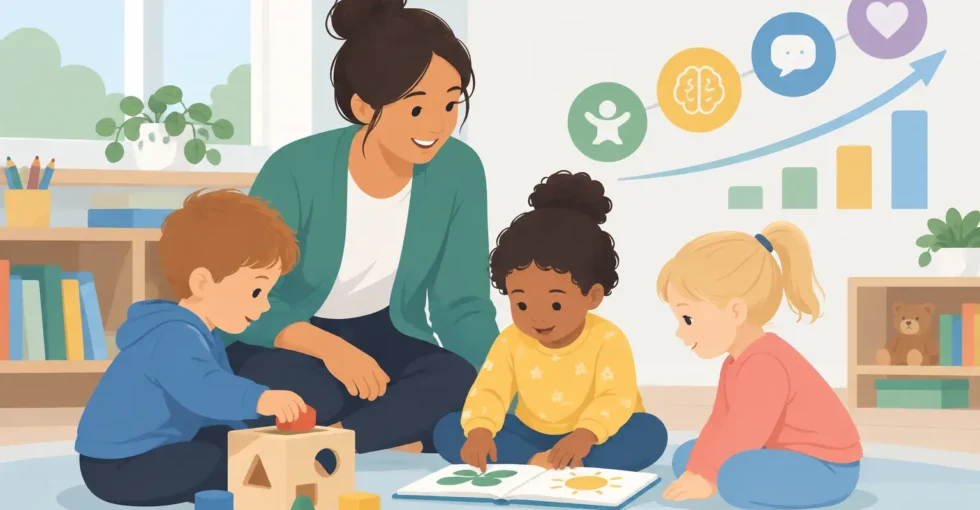
The EYFS has seven areas of learning and development. The first three are known as the prime areas because they provide the foundations for so much else:
- communication and language
- physical development
- personal, social and emotional development
The remaining four areas are literacy, mathematics, understanding the world, and expressive arts and design.
You do not need to turn family time into a lesson plan or monitor every area separately. The areas overlap naturally. When your child helps lay the table, they may be counting, strengthening coordination, following instructions and feeling proud of contributing. When they retell a favourite story, they are building language, memory, imagination and early literacy.
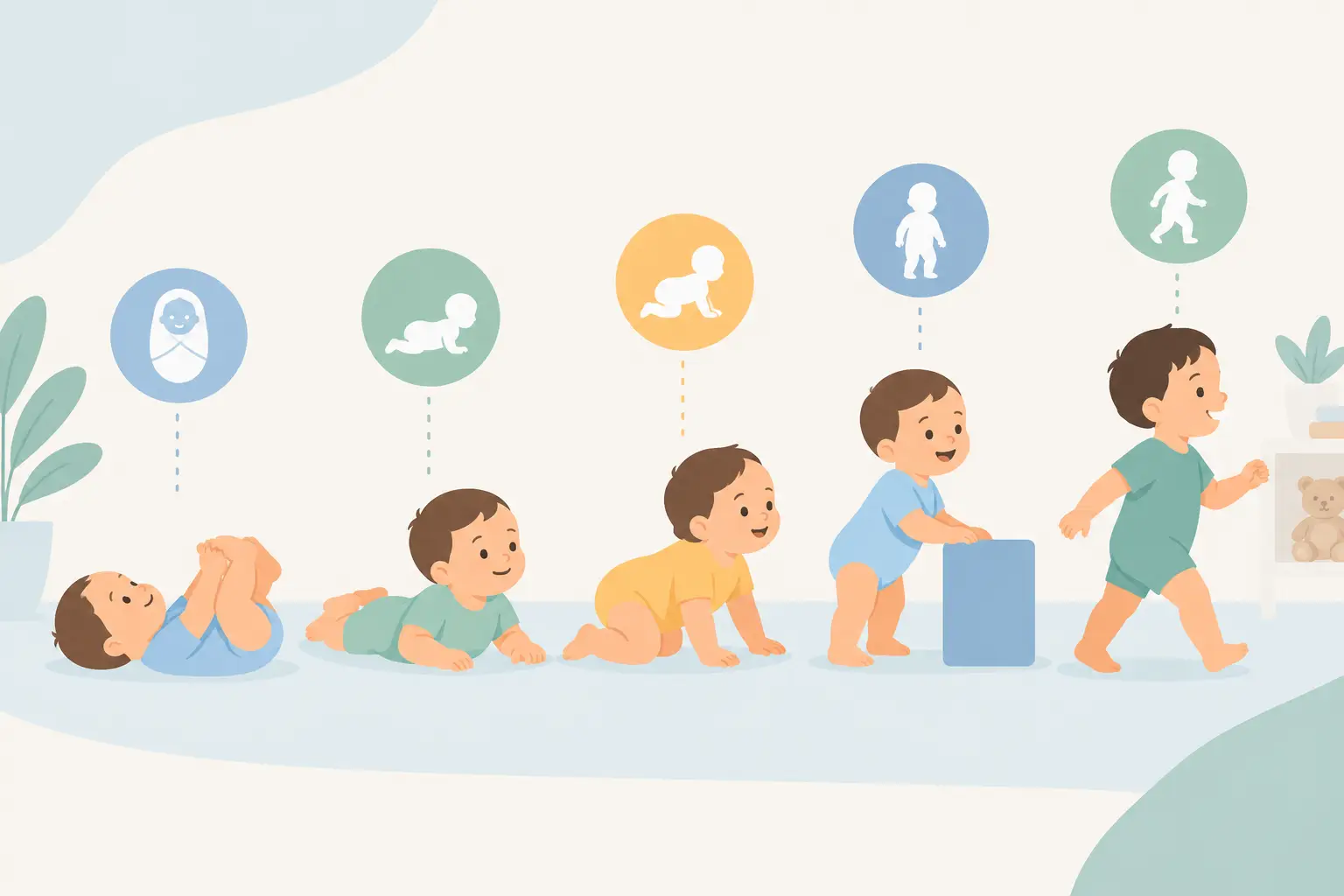
For babies and younger toddlers, the prime areas are especially central. Warm, responsive relationships, movement, communication and emotional security are the building blocks for later learning. As children grow, they begin to apply these foundations more widely through books, mark-making, problem-solving, creative play and curiosity about the world around them.
Progress is about the whole child
It is easy to focus on visible milestones, such as writing their name or counting to ten. These can be lovely achievements, but they are only part of the picture. Being able to wait briefly for a turn, use words to ask for help, put on a coat, recover after disappointment or become absorbed in a chosen activity are all meaningful signs of development.
A nurturing nursery will look at learning alongside wellbeing. Children are more able to explore, communicate and persevere when they feel secure with familiar adults and confident in their surroundings. That is why a strong key-person relationship matters so much: it gives children a trusted base from which to grow.
How to understand EYFS progress updates from nursery
A nursery update may include observations, photographs, a short learning story or notes from your child’s key person. Rather than reading it as a report card, look for the story behind it.
Ask yourself what your child chose to do, how they approached it and what happened next. For example, an update saying that your child mixed colours at the painting table is not simply about naming colours. It might show curiosity, concentration, hand control, language such as ‘lighter’ or ‘darker’, and the confidence to test an idea.
Words such as ‘emerging’, ‘developing’ or ‘secure’ are sometimes used to describe a child’s current learning. These should be helpful starting points for discussion, not labels that define your child. Development is fluid. A child can be secure in one context and still need encouragement in another, particularly when they are tired, unwell, settling into a new room or managing a big change at home.
The most useful updates explain the next step. This may be something simple, such as encouraging your child to use two-word phrases, offer a choice during play, practise climbing safely or share a story with repeated phrases. Small next steps are purposeful. They help adults support progress without putting pressure on children to perform.
Questions worth asking your child’s key person
If an update leaves you unsure, a quick conversation can bring it to life. You might ask what your child has particularly enjoyed recently, how they join in with other children, or what staff are doing to support their next step.
It can also help to share what you are seeing at home. Perhaps your child has started singing a song from nursery, is fascinated by diggers, or has become determined to pour their own drink. Families hold vital knowledge about their children, and nursery practitioners can use those insights to make learning feel familiar and motivating.
A good partnership is not about parents being expected to teach at home. It is about joining the dots between home and nursery so your child experiences consistent encouragement, care and understanding.
The progress check between ages two and three
One formal EYFS milestone is the progress check, completed when a child is aged between two and three. This focuses mainly on the prime areas: communication and language, physical development, and personal, social and emotional development.
The check gives parents and practitioners a chance to talk about how a child is developing, celebrate strengths and identify any areas where additional support could be helpful. It may also be shared, with parental agreement, to support joined-up work with health professionals.
If a nursery raises a concern, it does not mean anyone has failed or that your child has been given a fixed label. Early conversations can be very positive. They give everyone time to understand what a child needs and put the right support in place, whether that is extra language-rich interaction, advice on routines, specialist input or simply a closer look over time.
Children develop at different rates, but concerns should never be brushed aside either. The best approach is calm, curious and collaborative: ask what has been noticed, in which situations it happens, what has already been tried and what support is being suggested.
Why comparisons can make progress harder to see
Comparing children is understandable, especially when friends, siblings or social media seem to offer a constant stream of milestones. But it can quickly obscure what matters most: your child’s individual journey.
Two children of the same age may have very different strengths. One may be physically adventurous, while another takes time to observe before joining in. One may love familiar routines, while another thrives on imaginative conversation. These differences are not problems to be corrected. They are clues that help adults respond well.
There are times when comparison is useful in a professional sense. EYFS guidance helps practitioners recognise typical patterns of development and spot when a child may benefit from more support. But that professional knowledge should lead to thoughtful action, not unnecessary alarm or pressure.
Try to notice progress against your child’s own starting point. Perhaps they now wave goodbye with confidence, sit for longer at a favourite activity, use a new word, or invite another child into their game. These quiet gains often matter enormously.
Supporting EYFS learning at home without pressure
The most valuable home learning is often woven into ordinary family life. Talk together while walking to the shops. Let your child help stir dinner, choose between two jumpers or find socks from the laundry basket. Read the same much-loved book again, even if you know every word by heart.
Give them time to try. It can be tempting to step in when shoes are on the wrong feet or a puzzle piece will not fit, particularly on a busy morning. Sometimes practical life wins, and that is perfectly reasonable. At calmer moments, allowing a little extra time helps children build independence, resilience and confidence.
Play remains essential. Blocks, water, pretend cafés, garden hunts, songs and cosy chats all create rich opportunities for EYFS learning. Expensive resources are not required. Your attention, encouragement and willingness to follow their interest are often what make the biggest difference.
When you should seek a fuller conversation
Speak to your child’s key person if you have a persistent concern about communication, movement, behaviour, eating, sleep, friendships or how settled they seem. You know your child best, and it is always appropriate to ask for a conversation.
Equally, ask if you are simply unsure what an update means. Clear communication is part of quality early years care. At Dinotots, we believe parents deserve both the warmth of knowing their child is cherished and the confidence of understanding how their learning is being supported.
EYFS progress is not a race towards school or a measure of your child’s worth. It is a shared, evolving picture of a child becoming more curious, capable and secure. Keep the conversation open, celebrate the small steps, and trust that happy, supported children have the strongest foundations from which to flourish.