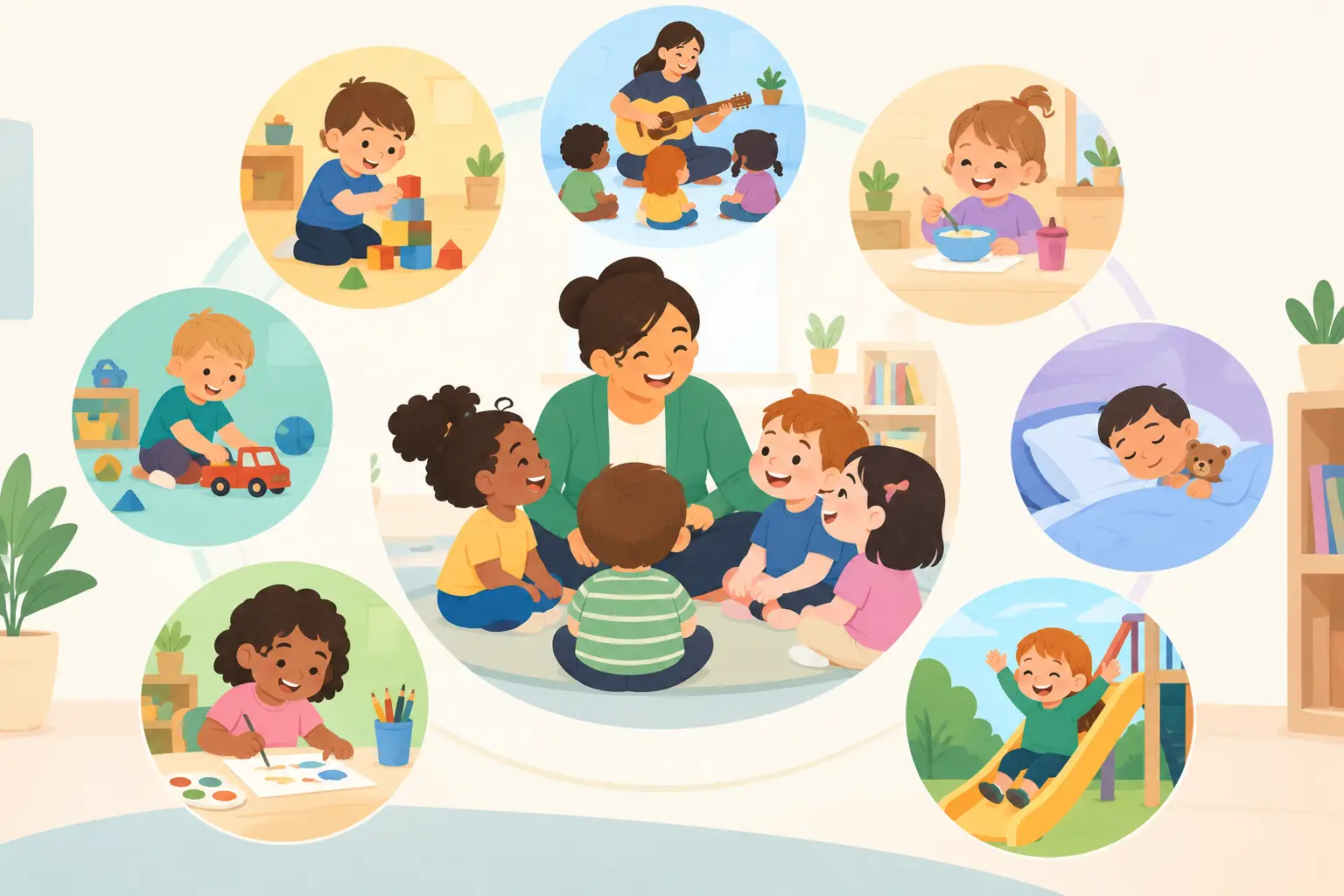

The first few nursery drop-offs can carry a lot of feeling. Your child may be excited one morning, clingy the next, and still learning that you will always come back. Dedicated key carer benefits make this transition gentler by giving your child one familiar adult who knows their routines, comforts and growing confidence.
A key carer is not simply the person who supervises a child during the day. They build a trusting relationship, notice the small changes that matter and help each child feel seen within a busy, happy nursery environment. For parents, that relationship offers something just as valuable: the reassurance of knowing there is someone who understands your child as an individual.
What does a dedicated key carer do?
Every child needs a team around them, and quality early years care is always a shared responsibility. A dedicated key carer gives that team a clear point of connection. They take a special interest in your child’s wellbeing, development and daily experiences, while working closely with colleagues so care remains consistent throughout the day.
Their role often begins with settling in. They learn how your child likes to be soothed, whether they need a little extra time at mealtimes, what makes them laugh and which activities capture their attention. For a baby, this may mean carefully following familiar sleep and feeding routines. For a preschooler, it might mean encouraging a new friendship, supporting toilet training or helping them find the words for a big feeling.
A key carer also observes children at play and plans meaningful next steps within the Early Years Foundation Stage. This is not about pushing children ahead too quickly. It is about offering the right encouragement at the right time, whether that is sharing a story, practising turn-taking, building hand strength or developing confidence to join a group activity.
Dedicated key carer benefits for children
The greatest benefit is emotional security. Young children learn best when they feel safe, settled and valued. A familiar adult who welcomes them warmly, understands their signals and responds consistently can make nursery feel less like a new place and more like a trusted part of their world.
A reassuring base for new experiences
Children are naturally curious, but curiosity can fade when they feel overwhelmed. A secure relationship with a key carer gives a child a reassuring base from which to explore. They may feel ready to try messy play, join a music session or approach another child because they know a trusted adult is nearby.
This is especially helpful during changes. Starting nursery, moving into a new room, welcoming a sibling at home or returning after illness can all affect a child’s emotions. Their key carer can spot when they need extra reassurance and help them settle at a pace that feels manageable.
Care that reflects the individual child
No two children arrive with the same routines, interests or temperament. One may charge happily towards the construction area, while another prefers to watch quietly before joining in. A dedicated key carer gets to know these differences and uses them to shape care and learning.
That personal knowledge supports better everyday decisions. If a child is tired, frustrated or unusually quiet, a familiar carer is more likely to recognise that this is different from their usual behaviour. They can respond with kindness, patience and appropriate support rather than expecting every child to fit the same pattern.
Stronger communication and language
Warm, responsive conversations are central to early language development. When a key carer knows a child well, they can build on what the child says, notices and enjoys. They might talk about the digger a child saw on the way to nursery, repeat a favourite rhyme or introduce new words while preparing snack together.
Children who are not yet using many words still communicate constantly through gestures, facial expressions and behaviour. A consistent adult becomes more skilled at reading those messages, helping children feel understood before they can always explain what they need.
Confident progress towards independence
A caring relationship should not make children dependent on one adult. Done well, it gives them the confidence to become more independent. With encouragement from a trusted key carer, children can begin to put on their own coat, make choices at play, manage small disagreements and take pride in new skills.
As confidence grows, the child naturally builds positive relationships with other practitioners and friends too. The key carer remains an important anchor, not the only person the child can turn to.
A clearer partnership with parents
Parents know their children best. A dedicated key carer brings nursery observations together with the knowledge families share from home, creating a more complete picture of a child’s needs and achievements.
That may include a quick handover at the door, a conversation about sleep or changes at home, or sharing the delight of a new milestone. These exchanges may seem small, yet they help home and nursery feel connected. When children are learning new routines in one place, consistency in the other can make a real difference.
For working parents, clear communication can also ease the uncertainty that naturally comes with being apart from a child. Rather than wondering how their day has gone, parents can hear about the activity that made them smile, the friendship they are forming or the skill they practised with pride.
At Dinotots, communication is part of caring well. Families deserve honest, respectful updates, including when a child has had a difficult moment as well as when they have flourished. Trust grows through both.
How key carers support learning without losing the joy
Early education should feel like childhood: full of play, stories, movement, questions and discovery. A key carer helps ensure each child can take part in this learning in a way that feels engaging rather than pressured.
Through everyday observations, they identify what children can already do and what may be helpful to explore next. A child fascinated by water may be offered pouring and measuring activities. A child who loves pretending may be encouraged to use new vocabulary in the role-play area. A child developing physical confidence may be supported to climb, balance and move safely.
This approach also helps practitioners notice when extra support may be useful. Children develop at different rates, and there is no value in comparing one child harshly with another. However, identifying patterns early means families and staff can talk openly, celebrate progress and agree the right support where needed.
Consistency matters, but flexibility matters too
A dedicated key carer arrangement is highly beneficial, but parents should not expect one person to be available every moment of every day. Nurseries need staff holidays, training, breaks and sensible cover arrangements to operate safely and sustainably.
What matters is that your child’s care remains consistent. A well-organised setting introduces children to other familiar practitioners, keeps clear records and makes sure the wider team understands routines, allergies, comfort strategies and developmental priorities. This means your child is cared for warmly even if their key carer is away.
It also depends on the child. Some children form a very close attachment quickly; others take longer or happily connect with several adults. Good practitioners respect these differences. They do not force a relationship, but patiently create the conditions for trust to grow.
Questions worth asking when choosing a nursery
When visiting a nursery, ask how key carers are allocated and how they help children settle. Find out how parents receive updates, how observations inform planning and what happens when the key carer is absent. You may also want to ask how staff support children through room transitions and whether your child will have opportunities to build relationships with the wider team.
Listen not only for policies, but for warmth and clarity. The best answers should show that the setting has thoughtful systems in place while still seeing each child as a unique person. A nursery can be lively and full of activity, yet still offer an oasis of calm when a child needs a familiar cuddle, a quiet story or a little time to reset.
Choosing childcare is a practical family decision, but it is also an emotional one. A dedicated key carer cannot remove every wobbly goodbye, and nor should they replace the special bond you share at home. They can, however, give your child a trusted hand to hold as they discover friendship, independence and the happiness of learning in their own time.