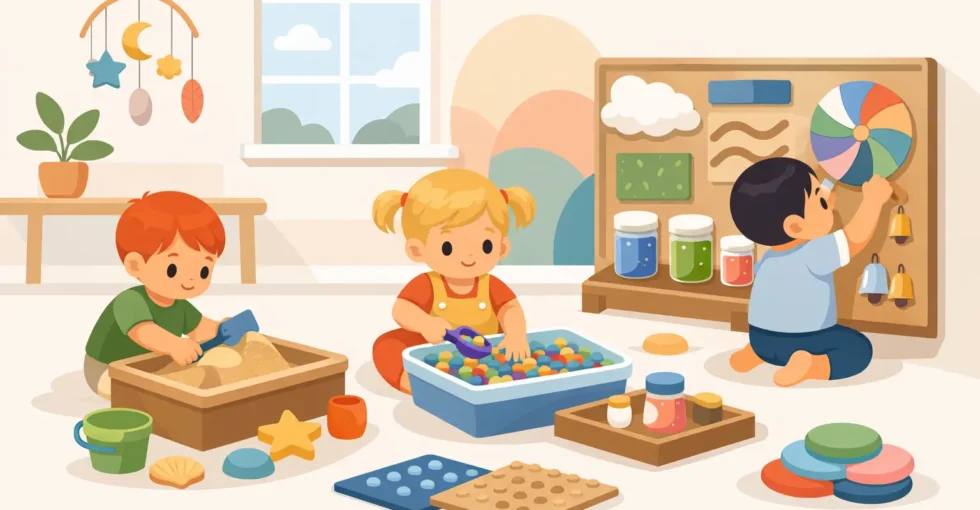

A toddler who happily squishes oats, splashes water or presses playdough is not just making a mess. They are learning through their whole body. That is why sensory activities for toddlers nursery settings are such a valuable part of early years learning. Done well, they help children feel settled, curious and confident while supporting the skills they need for later learning.
For parents, sensory play can sometimes look simple on the surface. A tray of rice. A bowl of foam. A basket of textured objects. Yet underneath that simple setup, a great deal is happening. Toddlers are exploring cause and effect, building hand strength, hearing new words, noticing differences and learning how to regulate their feelings. In a nursery environment, these moments also support turn-taking, focus and social confidence.
Why sensory play matters in a toddler nursery
Toddlers learn best when they can touch, move, listen, smell and investigate. At this age, abstract explanation means very little. They need real experiences. Sensory play gives them exactly that.
A child pouring water from one jug to another is practising coordination and early problem-solving. A child patting cornflour mixture is discovering how materials change under pressure. A child exploring citrus peel or lavender sachets is expanding their understanding of scent and language at the same time. These experiences help build strong neural connections because they involve more than one sense at once.
There is also an emotional benefit that parents often notice quickly. Sensory activities can be very calming. Repetitive actions such as scooping, stirring, squeezing and pouring can help toddlers feel more regulated, especially during transitions or after a busy period of the day. That does not mean every child will find every activity soothing. Some children love messy textures, while others need time, distance or tools before they feel ready to join in. A thoughtful nursery respects that difference.
What good sensory activities for toddlers nursery settings should include
The best sensory experiences are not necessarily the most elaborate. They are safe, well supervised and matched to the children’s stage of development. In practice, that means staff think carefully about materials, allergies, choking risks and how an activity will feel for different children.
It also means there is a learning purpose behind the play. Not a pressured, formal outcome, but a clear understanding of what the activity may support. One tray might encourage fine motor control. Another may build vocabulary around wet, dry, cold, soft and rough. Another may support sharing space with others.
Good sensory provision leaves room for choice. Some toddlers will dive straight in with both hands. Others may prefer to watch first, use a spoon, or stay at the edge until they feel secure. That is still meaningful participation. In a nurturing nursery, children are gently encouraged, never pushed.
Sensory tray ideas that work well for toddlers
Sensory trays are popular for a reason. They are easy to adapt, simple to refresh and full of learning opportunities. A dry tray made with oats, rice or pasta can support scooping, pouring and filling. Add spoons, cups and small containers, and toddlers begin experimenting almost immediately.
Water play is another reliable favourite. Warm water with jugs, funnels and floating objects can hold a toddler’s attention for a surprisingly long time. It supports coordination, concentration and language, while giving children a clear sense of cause and effect. If the room is busy or a child is feeling overwhelmed, water play can also provide a calmer focus.
Shaving foam or taste-safe foam can offer a very different sensory experience. Children can make marks with fingers, pat it flat or hide objects underneath. This can be brilliant for children who enjoy tactile play, although it is not right for every child. Some dislike the light, slippery feel, so alternatives matter.
Playdough remains one of the most useful sensory tools in any nursery. It strengthens little hands, supports imagination and can be adapted with scents, colours and natural materials. Rolling, pinching and pressing all help prepare hands for later mark-making and early writing.
Natural sensory play supports calm, curiosity and language
Natural materials often bring a quieter, grounded feel to sensory play. Pinecones, leaves, sand, pebbles, herbs and pieces of bark all offer rich textures and scents without overstimulating the space. They also help toddlers notice seasonal change, which is an important part of understanding the world around them.
A small tray of damp soil with spoons and plant pots can become a wonderful exploration activity. So can a basket filled with safe objects in different textures such as soft fabric, smooth wood and bumpy natural sponge. Adults can extend the learning through gentle language. Is it rough or smooth? Heavy or light? Cold or warm? The value is not in testing a child for the right answer. It is in giving them words to match what they feel.
For many families, natural sensory experiences feel more manageable at home too. They do not need special equipment, and they can often be repeated in simple ways after nursery. That consistency can be reassuring for toddlers who thrive on familiar routines.
Messy play is helpful, but it needs thoughtful boundaries
Parents often have mixed feelings about messy play. On one hand, they know it is beneficial. On the other, they picture soaked sleeves, stained tops and a child who hates having sticky hands. Both reactions are fair.
Messy play should never be treated as though every toddler must enjoy it in the same way. Some children need an apron, a clear start and finish, and quick access to warm water for washing hands. Others are happiest with dry textures before moving on to wet or sticky materials. When nursery staff understand this, sensory play becomes more inclusive and more positive.
Boundaries matter too. A well-run nursery does not confuse free exploration with chaos. The environment should be prepared, the materials should be appropriate, and adults should stay close enough to support without taking over. That balance helps children feel safe while still allowing proper exploration.
How sensory activities support the EYFS
Sensory play connects naturally to the Early Years Foundation Stage because it supports several areas of learning at once. Communication and language develop as children hear and use descriptive words. Physical development grows through pouring, squeezing, stirring and grasping. Personal, social and emotional development is strengthened as children build confidence, manage feelings and learn alongside others.
There is also a strong link to understanding the world. Toddlers begin to notice how materials behave, how things change when mixed, and what happens when they repeat an action. Creative development comes into it too, especially when children use sensory materials in imaginative ways.
This is one reason sensory activities remain such an important part of high-quality nursery practice. They do not separate care from learning. They bring the two together in a way that feels natural to young children.
What parents should look for in a nursery sensory programme
If you are choosing a nursery, it is worth looking beyond whether they offer sensory play and asking how they offer it. The real difference is in the detail.
A strong setting will plan sensory experiences with safety, supervision and child development in mind. Staff should be able to explain why certain activities are used, how they support different children, and how they adapt when a child is hesitant or has additional needs. Cleanliness, safe materials and close observation all matter just as much as creativity.
It is also reassuring when a nursery shares what children have been doing and why it matters. Parent communication makes a real difference here. When families understand that a simple tray activity supported concentration, language or confidence, the value of that play becomes much clearer.
At Dinotots, our approach to early years learning is built around exactly that balance – warm, child-centred care with clear developmental purpose. Sensory experiences are part of helping children feel secure enough to explore, learn and enjoy their day.
Bringing sensory play into everyday toddler life
The most effective sensory activities do not need to be saved for special occasions. They can be part of the everyday rhythm of nursery life. Water poured at the right table, dough offered during a calm morning, herb pots explored in the garden, or fabric treasure baskets available for quiet discovery all help children learn through repetition and familiarity.
That repetition matters. Toddlers often deepen their learning by doing the same kind of activity again and again. Adults sometimes feel pressure to offer something new every day, but young children usually benefit more from returning to familiar experiences with small variations. The confidence that comes from knowing what to expect can be just as important as the activity itself.
Sensory play is at its best when it meets children where they are. Some days they want movement and noise. Other days they need something slower and more soothing. A nursery that understands this can create an environment where children feel both cared for and inspired to explore.
When sensory activities are planned with warmth, skill and purpose, they do more than keep toddlers busy. They help children feel safe in their bodies, confident in their choices and ready to connect with the world around them.