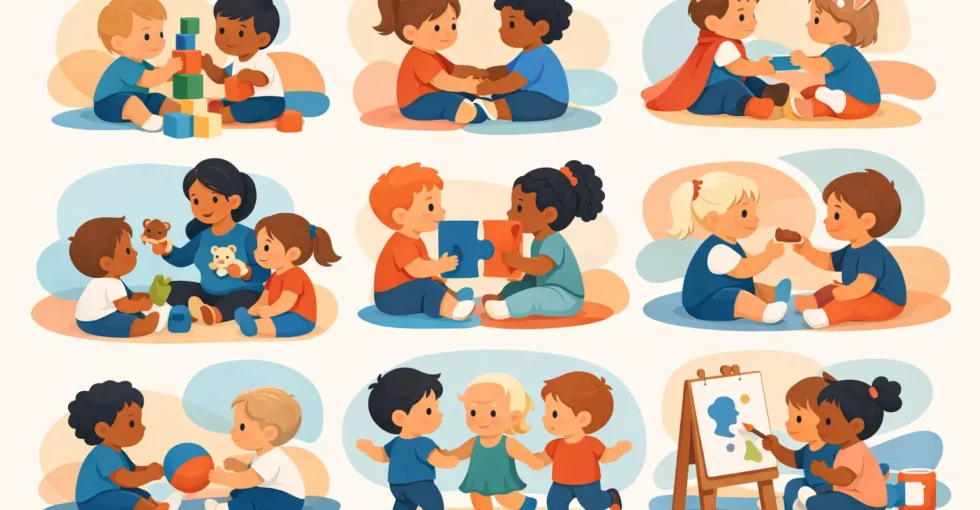

A toddler who happily chats to another child one day might hide behind your leg the next. That is completely normal. Toddler social development activities work best when they feel safe, playful and low-pressure, because young children learn how to connect with others in small moments repeated often.
At this age, social development is not about perfect manners or constant sharing. It is about building the early skills that sit underneath friendships later on – noticing other people, taking turns, coping with short waits, reading simple facial expressions and feeling secure enough to join in. For parents, that can be reassuring. Progress does not have to look polished to be real.
Why social development matters in the toddler years
Toddlers are learning a great deal at once. They are finding words, testing independence and managing big feelings with a brain that is still very much under construction. That is why social moments can feel lovely one minute and stormy the next.
When children have regular chances to play alongside others, follow simple routines and practise short interactions, they begin to understand how being with other people works. They learn that another child may want the same toy, that waiting is hard but possible, and that grown-ups can help them feel calm when things go wrong. These experiences support confidence, emotional security and school readiness.
It also helps to remember that temperament plays a part. Some toddlers run straight into a group. Others need time to watch first. Neither is wrong. The aim is not to make every child outgoing. It is to help each child feel secure, included and increasingly able to interact.
Toddler social development activities that fit everyday family life
The most effective activities are usually the simplest. You do not need a packed timetable or expensive resources. What matters most is repetition, warmth and an adult nearby to model what social behaviour looks like.
1. Roll-and-return ball play
Sitting on the floor and rolling a ball back and forth teaches one of the earliest social rules – my turn, your turn. Keep it light and predictable. Say the turns aloud, smile, and celebrate the return rather than how neatly the ball travels.
If another child joins in, even better. If not, this still counts. Toddlers first learn social patterns through trusted adults before using them confidently with peers.
2. Simple group songs with actions
Songs like Row, Row, Row Your Boat or Wind the Bobbin Up help toddlers join in with others without needing many words. The shared rhythm gives structure, and the actions offer a way to participate even when speaking is still developing.
This is especially useful for children who are shy in new groups. Singing together can feel less demanding than direct conversation. It gives them a place in the group while they build confidence.
3. Snack-time sharing routines
Structured snack time can be one of the best toddler social development activities because it combines routine, language and patience. A child can help hand out cups, choose who receives fruit next or wait for everyone before starting.
This will not always go smoothly. Some toddlers find food-related waiting particularly difficult. That does not mean the activity has failed. It means they are practising a real skill in a real situation.
4. Parallel play with gentle commentary
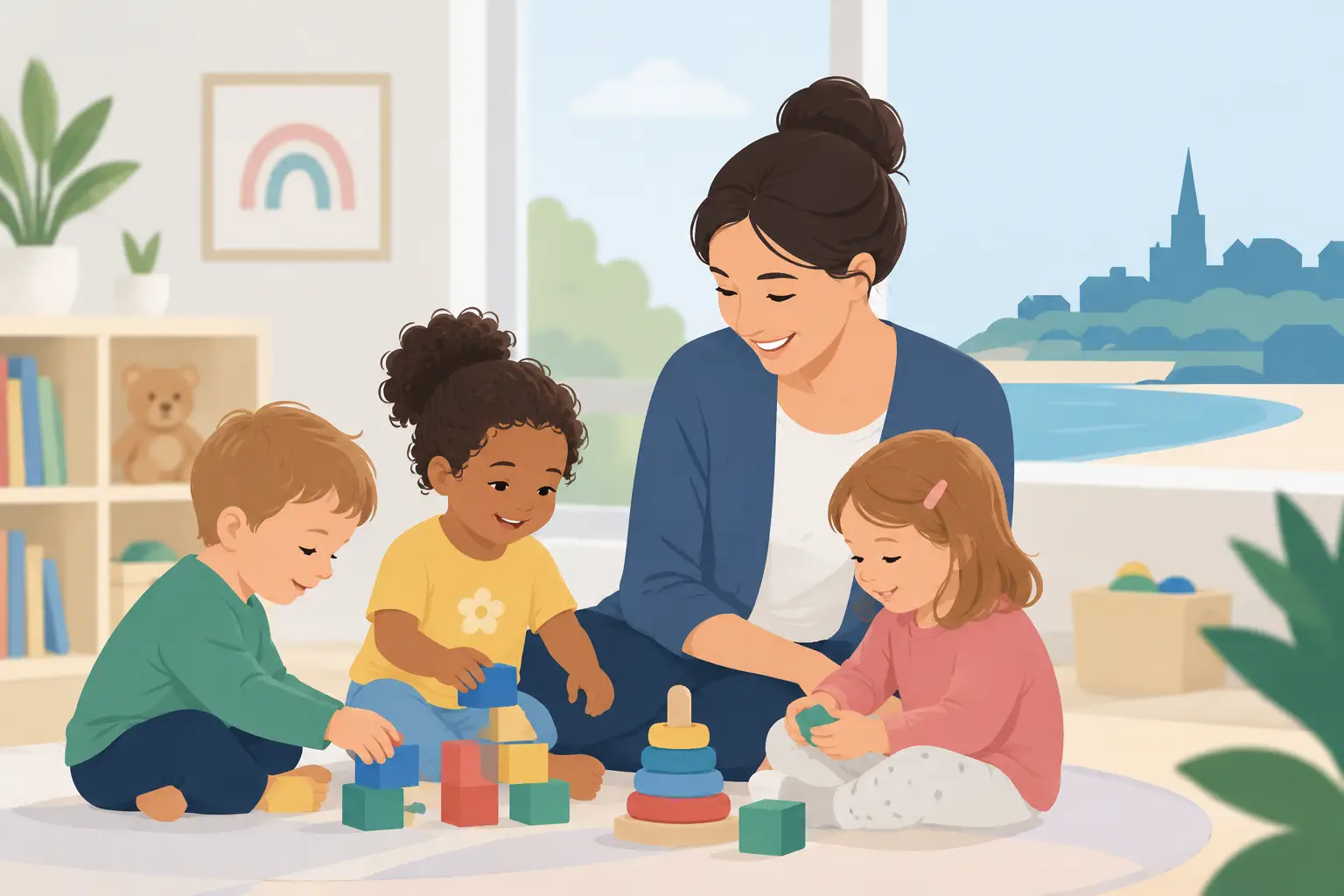
Toddlers often play beside each other before they truly play together. That stage matters. If two children are building with blocks side by side, an adult can support social awareness with simple commentary such as, “You are both using the blue bricks,” or, “Ella made a tall tower and you noticed it.”
This helps children tune in to one another without forcing interaction. For some toddlers, especially after a busy week or a poor night’s sleep, playing near others is enough.
5. Turn-taking games with one special toy
Choose something appealing – bubbles, a pop-up toy or a toy till – and create very short turns. Keep language simple: “Milo’s turn, now Ava’s turn.” Use a visual cue if needed, such as counting to three.
Short turns work better than long ones. Asking a toddler to wait too long can lead to frustration faster than learning. The goal is success they can manage, then building from there.
6. Pretend play with everyday roles
Tea parties, shopping games and caring for dolls all help toddlers rehearse social situations. They get to copy greeting, offering, helping and comforting. Those are powerful foundations for real interaction.
Pretend play also gives parents a window into what their child is processing. A toddler who keeps putting a toy baby to bed may be exploring routines and care. A child who says “my turn” over and over is likely working on control and fairness.
7. Book sharing about feelings and friends
A short picture book can open up social learning in a calm, connected way. Pause to notice faces: “He looks sad,” or, “She is waiting for a turn.” This builds emotional vocabulary, which supports behaviour later.
Children who can begin to name feelings often cope better in social situations because the experience becomes less overwhelming. They still need adult support, of course, but language gives them a useful starting point.
8. Small playdates with a clear beginning and end
A full afternoon with several children can be too much for many toddlers. A shorter playdate with one familiar child often works better. Start with an activity both children can do side by side, such as water play, drawing or pushing cars.
Try not to expect constant joint play. Toddlers may drift apart, come back together, then need a snack or cuddle. That rhythm is normal. Success might simply mean they stayed in the same space, copied one another a little and recovered well from a minor disagreement.
9. Helping with everyday jobs
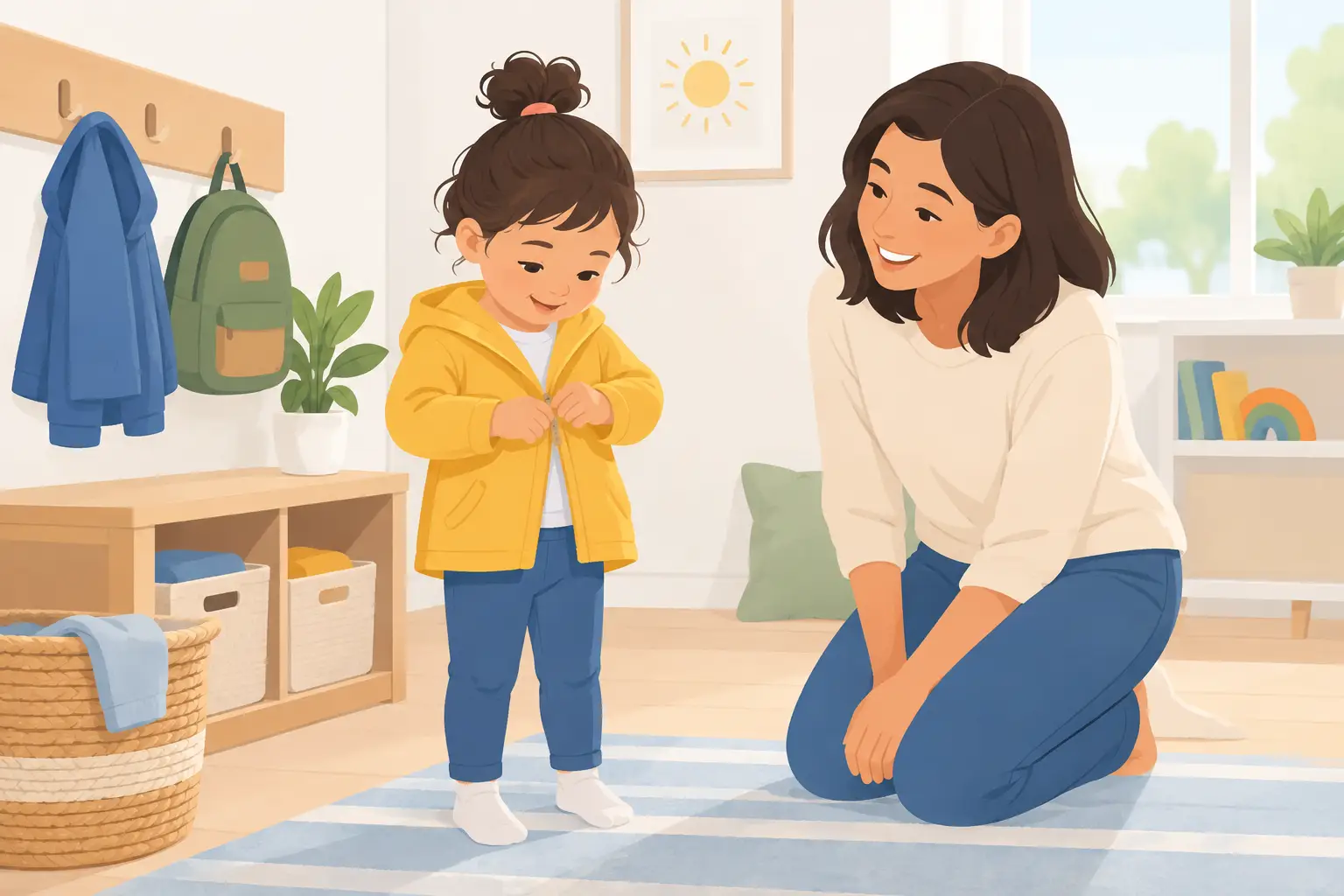
Real tasks can be wonderfully social. Putting socks in pairs, carrying spoons to the table or tidying toys into baskets teaches cooperation in a natural way. Children feel included, and they learn that being part of a group means doing things together.
For working families, this matters. Social learning does not need to sit on top of family life as another job to manage. It can happen while getting through the day.
How adults make these activities work
A toddler’s social world is shaped as much by adult response as by the activity itself. Calm, predictable support helps children feel safe enough to keep trying. That often means staying close, using clear words and stepping in before frustration becomes too big.
Modelling matters more than lengthy explanations. “Can I have a turn when you are finished?” is more useful than repeatedly saying, “Be nice.” Toddlers learn from what they hear and see again and again.
Timing matters too. Social practice is hardest when children are hungry, overtired or overwhelmed. If your child struggles at a busy toddler group but chats happily with one cousin at home, that is helpful information, not a failure. It may simply mean they need a smaller step.
When not to push it
There is a difference between encouraging social growth and expecting too much too soon. A toddler who clings in a new room may need a few visits just to observe. A child who snatches may still be developing the language and impulse control needed to do better. Gentle repetition is usually more effective than pressure.
It also helps to avoid measuring your child against the most outgoing child in the room. Social development is not a race. Some children build confidence quietly and steadily, especially when they have trusted adults, familiar routines and warm guidance.
In high-quality early years settings, this is one reason secure relationships matter so much. A dedicated key person, predictable routines and thoughtfully planned play can help toddlers feel emotionally safe enough to connect with others. That secure base supports everything else.
Signs your toddler is building social skills
Progress can be subtle. You may notice your child watching other children more closely, copying actions in a song, bringing you a toy to join their play or tolerating a short wait with less distress. They may begin using simple phrases such as “my turn”, “help please” or “come on”.
There will still be bumps. Even confident toddlers can struggle with sharing and frustration. Social development is rarely a straight line. What matters is that, over time, your child is getting more practice, more confidence and more support in understanding other people.
If you ever feel unsure, speak to your nursery team or health visitor. Sometimes parents need reassurance that behaviour is typical. Sometimes a child benefits from a little extra support. Either way, early conversations are helpful.
The best toddler social development activities are the ones your child can return to again and again with a sense of safety, joy and connection. A ball rolled across the carpet, a shared song before tea, a short playdate that ends well – these small moments are often where real confidence begins.